Contact Us
Table of Contents
Search Site
Google listing of all pages on this website
Site Map
Toby
Johnson's Facebook page
Toby
Johnson's YouTube channel
Toby Johnson on Wikipedia
Toby
Johnson Amazon Author Page

Secure site at
https://tobyjohnson.com
Also on this
website:
As an Amazon Associate
I earn from qualifying purchases.
Toby
Johnson's books:
Toby's books are available as ebooks from
smashwords.com, the Apple iBookstore, etc.
FINDING
YOUR OWN TRUE MYTH: What I Learned
from Joseph Campbell: The
Myth
of the
Great Secret
III
GAY
SPIRITUALITY:
The Role of Gay Identity in the Transformation of Human Consciousness
GAY PERSPECTIVE:
Things Our Homosexuality Tells Us about the Nature of God and the
Universe

SECRET MATTER, a sci-fi novel with
wonderful "aliens" with an
Afterword by Mark Jordan
GETTING
LIFE IN PERSPECTIVE:
A
Fantastical Gay Romance set in two different time periods
THE FOURTH QUILL, a
novel about attitudinal healing and the problem of evil
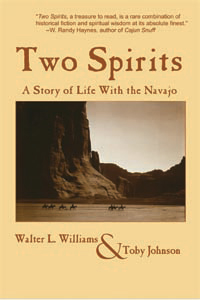
TWO SPIRITS: A Story of Life with
the
Navajo, a collaboration with Walter L. Williams

CHARMED
LIVES: Spinning Straw into
Gold: GaySpirit in Storytelling, a collaboration with
Steve Berman and some 30 other writers
THE MYTH OF THE GREAT
SECRET:
An
Appreciation of Joseph Campbell
IN SEARCH OF GOD IN THE
SEXUAL UNDERWORLD: A Mystical Journey
Unpublished manuscripts
About ordering
Books on
Gay Spirituality:
White
Crane Gay Spirituality Series

Articles
and Excerpts:
Review of Samuel
Avery's The
Dimensional Structure of Consciousness
Funny
Coincidence: "Aliens Settle in San Francisco"
About Liberty Books, the
Lesbian/Gay Bookstore for Austin, 1986-1996
The Simple Answer to the Gay Marriage Debate
A
Bifurcation of Gay Spirituality
Why gay people should NOT Marry
The Scriptural Basis for
Same Sex Marriage
Toby and Kip Get Married
Wedding Cake Liberation
Gay Marriage in Texas
What's ironic
Shame on the American People
The "highest form of love"
Gay Consciousness
Why homosexuality is a sin
The cause of homosexuality
The
origins of homophobia
Q&A
about Jungian ideas in gay consciousness
What
is homosexuality?
What
is Gay Spirituality?
My three
messages
What
Jesus said about Gay
Rights
Queering
religion
Common
Experiences Unique to Gay
Men
Is there a "uniquely gay
perspective"?
The
purpose of homosexuality
Interview on the Nature of
Homosexuality
What the Bible Says about
Homosexuality
Mesosexual
Ideal for Straight Men
Varieties
of Gay Spirituality
Waves
of Gay Liberation Activity
The Gay Succession
Wouldn’t You Like to Be Uranian?
The Reincarnation of
Edward Carpenter
Why Gay Spirituality: Spirituality
as Artistic Medium
Easton Mountain Retreat Center
Andrew Harvey &
Spiritual Activism
The Mysticism of
Andrew Harvey
The
upsidedown book on MSNBC
Enlightenment
"It's
Always About You"
The myth of the Bodhisattva
Avalokitesvara
Joseph
Campbell's description of
Avalokiteshvara
You're
Not A Wave
Joseph Campbell Talks
about Aging
What is Enlightenment?
What is reincarnation?
How many lifetimes in an
ego?
Emptiness & Religious Ideas
Experiencing experiencing experiencing
Going into the Light
Meditations for a Funeral
Meditation Practice
The way to get to heaven
Buddha's father was right
What Anatman means
Advice to Travelers to India
& Nepal
The Danda Nata
& goddess Kalika
Nate Berkus is a bodhisattva
John Boswell was Immanuel Kant
Cutting
edge realization
The Myth of the
Wanderer
Change: Source of
Suffering & of Bliss
World Navel
What the Vows Really
Mean
Manifesting
from the Subtle Realms
The Three-layer
Cake
& the Multiverse
The
est Training and Personal Intention
Effective
Dreaming in Ursula LeGuin's The Lathe of Heaven
Gay
Spirituality
Curious
Bodies
What
Toby Johnson Believes
The
Joseph Campbell Connection
The
Mann Ranch (& Rich Gabrielson)
Campbell
& The Pre/Trans Fallacy
The
Two Loves
The
Nature of Religion
What's true about
Religion
Being
Gay is a Blessing
Drawing Long Straws
Freedom
of Religion
The
Gay Agenda
Gay
Saintliness
Gay
Spiritual Functions
The subtle workings of the spirit
in gay men's lives.
The Sinfulness of
Homosexuality
Proposal
for a study of gay nondualism
Priestly Sexuality
Having a Church to
Leave
Harold Cole on Beauty
Marian Doctrines:
Immaculate Conception & Assumption
Not lashed to the
prayer-post
Monastic or Chaste
Homosexuality
Is It Time to Grow
Up? Confronting
the Aging Process
Notes on Licking
(July, 1984)
Redeem Orlando
Gay Consciousness changing
the
world by Shokti LoveStar
Alexander Renault
interviews Toby
Johnson
Mystical Vision
"The
Evolution of Gay Identity"
"St. John of the
Cross & the Dark Night of
the Soul."
Avalokiteshvara
at the Baths
Eckhart's Eye
Let Me
Tell You a Secret
Religious
Articulations of the
Secret
The
Collective Unconscious
Driving as
Spiritual Practice
Meditation
Historicity
as Myth
Pilgrimage
No
Stealing
Next
Step in Evolution
The
New Myth
The Moulting of the Holy Ghost
Gaia
is a Bodhisattva
The Hero's
Journey
The
Hero's Journey as archetype -- GSV 2016
The Gay Hero Journey
(shortened)
You're
On Your Own
Superheroes
Seeing
Differently
Teenage
Prostitution and the Nature of Evil
Allah
Hu: "God is present here"
Adam
and Steve
The Life is
in the Blood
Gay retirement and the "freelance
monastery"
Seeing with
Different Eyes
Facing
the Edge: AIDS as an occasion for spiritual wisdom
What
are you looking for in a gay science fiction novel?
The Vision
The
mystical experience at the Servites' Castle in Riverside
A Most Remarkable
Synchronicity in
Riverside
The
Great Dance according to C.S.Lewis
The Techniques Of The
World Saviors
Part 1: Brer Rabbit and the
Tar-Baby
Part 2: The
Bodhisattva Avalokiteshvara
Part 3: Jesus
and the Resurrection
Part 4: A
Course in Miracles
The
Secret of the Clear Light
Understanding
the Clear Light
Mobius
Strip
Finding
Your
Tiger Face
How Gay Souls Get Reincarnated
Joseph
Campbell, the Hero's Journey, and the modern Gay Hero-- a five part
presentation on YouTube
About Alien Abduction
In
honor of Sir Arthur C Clarke
Karellen was a homosexual
The
D.A.F.O.D.I.L. Alliance
Intersections
with the movie When We Rise
More
about Gay Mental Health
Psych
Tech Training
Toby
at the California Institute
The
Rainbow Flag
Ideas for gay
mythic stories
People
Kip and Toby,
Activists
Toby's
friend and nicknamesake Toby Marotta.
Harry
Hay, Founder of the gay movement
About Hay and The New Myth
About
Karl
Heinrich Ulrichs, the first
man to really "come out"
About Michael Talbot, gay mystic
About Fr. Bernard Lynch
About Richard Baltzell
About Guy Mannheimer
About David Weyrauch
About
Dennis Paddie
About Ask the Fire
About
Arthur Evans
About
Christopher Larkin
About Mark Thompson
About Sterling Houston
About Michael Stevens
The Alamo Business
Council
Our friend Tom Nash
Second March on
Washington
The
Gay
Spirituality Summit in May 2004 and the "Statement
of Spirituality"
Book
Reviews
Be Done on Earth by Howard
E. Cook
Pay Me What I'm Worth by
Souldancer
The Way Out by Christopher
L Nutter
The Gay Disciple by John Henson
Art That Dares by Kittredge Cherry
Coming Out, Coming Home by Kennth
A. Burr
Extinguishing
the Light by B. Alan Bourgeois
Over Coffee: A conversation
For Gay
Partnership & Conservative Faith by D.a. Thompson
Dark Knowledge
by
Kenneth Low
Janet Planet by
Eleanor
Lerman
The
Kairos by Paul E. Hartman
Wrestling
with Jesus by D.K.Maylor
Kali Rising by Rudolph
Ballentine
The
Missing Myth by Gilles Herrada
The
Secret of the Second Coming by Howard E. Cook
The Scar Letters: A
Novel
by Richard Alther
The
Future is Queer by Labonte & Schimel
Missing Mary
by Charlene Spretnak
Gay
Spirituality 101 by Joe Perez
Cut Hand: A
Nineteeth Century Love Story on the American Frontier by Mark Wildyr
Radiomen
by Eleanor Lerman
Nights
at
Rizzoli by Felice Picano
The Key
to Unlocking the Closet Door by Chelsea Griffo
The Door
of the Heart by Diana Finfrock Farrar
Occam’s
Razor by David Duncan
Grace
and
Demion by Mel White
Gay Men and The New Way Forward by Raymond L.
Rigoglioso
The
Dimensional Stucture of Consciousness by Samuel Avery
The
Manly Pursuit of Desire and Love by Perry Brass
Love
Together: Longtime Male Couples on Healthy Intimacy and Communication
by Tim Clausen
War
Between Materialism and Spiritual by Jean-Michel Bitar
The
Serpent's Gift: Gnostic Reflections on the Study of Religion by
Jeffrey J. Kripal
Esalen:
America and the Religion of No Religion by Jeffrey J. Kripal
The
Invitation to Love by
Darren Pierre
Brain,
Consciousness, and God: A Lonerganian Integration by Daniel A
Helminiak
A
Walk with Four Spiritual Guides by Andrew Harvey
Can Christians Be Saved? by Stephenson & Rhodes
The
Lost Secrets of the Ancient Mystery Schools by Stephenson &
Rhodes
Keys to
Spiritual
Being: Energy Meditation and Synchronization Exercises by Adrian
Ravarour
In
Walt We
Trust by John Marsh
Solomon's
Tantric Song by Rollan McCleary
A Special Illumination by Rollan McCleary
Aelred's
Sin
by Lawrence Scott
Fruit
Basket
by Payam Ghassemlou
Internal
Landscapes by John Ollom
Princes
& Pumpkins by David Hatfield Sparks
Yes by Brad
Boney
Blood of the Goddess by William Schindler
Roads of Excess,
Palaces of
Wisdom by Jeffrey Kripal
Evolving
Dharma by Jay Michaelson
Jesus
in Salome's Lot by Brett W. Gillette
The Man Who Loved Birds by Fenton Johnson
The
Vatican Murders by Lucien Gregoire
"Sex Camp"
by
Brian McNaught
Out
& About with Brewer & Berg
Episode One: Searching for a New Mythology
The
Soul Beneath the Skin by David Nimmons
Out
on
Holy Ground by Donald Boisvert
The
Revotutionary Psychology of Gay-Centeredness by Mitch Walker
Out There
by Perry Brass
The Crucifixion of Hyacinth by Geoff Puterbaugh
The
Silence of Sodom by Mark D Jordan
It's
Never About What It's About by Krandall Kraus and Paul Borja
ReCreations,
edited by Catherine Lake
Gospel: A
Novel
by WIlton Barnhard
Keeping
Faith: A Skeptic’s Journey by Fenton Johnson
Dating the Greek Gods by Brad Gooch
Telling
Truths in Church by Mark D. Jordan
The
Substance of God by Perry Brass
The
Tomcat Chronicles by Jack Nichols
10
Smart
Things Gay Men Can Do to Improve Their Lives by Joe Kort
Jesus and the Shamanic Tradition of Same Sex Love
by Will Roscoe
The
Third Appearance by Walter Starcke
The Last Hours of Ancient Sunlight by Thom Hartmann
Surviving
and Thriving After a Life-Threatening Diagnosis by Bev Hall
Men,
Homosexuality, and the Gods by Ronald Long
An Interview
with Ron Long
Queering Creole Spiritual Traditons by Randy
Conner & David Sparks
An Interview with
Randy Conner
Pain,
Sex
and Time by Gerald Heard
Sex
and the Sacred by Daniel Helminiak
Blessing Same-Sex Unions by Mark Jordan
Rising Up
by
Joe Perez
Soulfully
Gay
by Joe Perez
That
Undeniable Longing by Mark Tedesco
Vintage: A
Ghost
Story by
Steve Berman
Wisdom
for the Soul by Larry Chang
MM4M a DVD
by Bruce Grether
Double
Cross
by David Ranan
The
Transcended Christian by Daniel Helminiak
Jesus
in Love by Kittredge Cherry
In
the Eye of the Storm by Gene Robinson
The
Starry Dynamo by Sven Davisson
Life
in
Paradox by Fr Paul Murray
Spirituality for Our Global Community by Daniel
Helminiak
Gay & Healthy in a Sick Society by Robert A.
Minor
Coming Out: Irish Gay Experiences by Glen O'Brien
Queering
Christ
by Robert Goss
Skipping
Towards Gomorrah by Dan Savage
The
Flesh of the Word by Richard A Rosato
Catland by
David Garrett Izzo
Tantra
for Gay Men by Bruce Anderson
Yoga
&
the Path of the Urban Mystic by Darren Main
Simple
Grace
by Malcolm Boyd
Seventy
Times Seven by Salvatore Sapienza
What
Does "Queer" Mean Anyway? by Chris Bartlett
Critique of Patriarchal Reasoning by Arthur Evans
Gift
of
the Soul by Dale Colclasure & David Jensen
Legend of the Raibow Warriors by Steven McFadden
The
Liar's
Prayer by Gregory Flood
Lovely
are the Messengers by Daniel Plasman
The Human Core of Spirituality by Daniel Helminiak
3001:
The Final Odyssey by Arthur C. Clarke
Religion and the Human Sciences by Daniel Helminiak
Only
the
Good Parts by Daniel Curzon
Four
Short
Reviews of Books with a Message
Life
Interrupted by Michael Parise
Confessions of a Murdered Pope by Lucien Gregoire
The
Stargazer's Embassy by Eleanor Lerman
Conscious
Living, Conscious Aging by Ron Pevny
Footprints Through the Desert by Joshua Kauffman
True
Religion by J.L. Weinberg
The Mediterranean Universe by John Newmeyer
Everything
is God by Jay Michaelson
Reflection
by Dennis Merritt
Everywhere
Home by Fenton Johnson
Hard Lesson by James
Gaston
God
vs Gay?
by Jay Michaelson
The
Gate
of Tears: Sadness and the Spiritual Path by Jay Michaelson
Roxie
&
Fred by Richard Alther
Not
the Son He Expected by Tim Clausen
The
9 Realities of Stardust by Bruce P. Grether
The
Afterlife Revolution by Anne & Whitley Strieber
AIDS
Shaman:
Queer Spirit Awakening by Shokti Lovestar
Facing the Truth of Your Life by Merle Yost
The
Super Natural by Whitley Strieber & Jeffrey J Kripal
Secret
Body by
Jeffrey J Kripal
In
Hitler's
House by Jonathan Lane
Walking on Glory by Edward Swift
The
Paradox
of Porn by Don Shewey
Is Heaven for Real? by Lucien Gregoire
Enigma by Lloyd Meeker
Scissors,
Paper, Rock by Fenton Johnson
Toby
Johnson's
Books on Gay Men's Spiritualities:
Gay Perspective
Things Our [Homo]sexuality
Tells Us
about the
Nature of God and
the Universe
Gay
Perspective is available as an audiobook narrated
by Matthew Whitfield. Click
here
Gay Spirituality
Gay Identity and
the Transformation of
Human Consciousness
Gay
Spirituality is now
available as an audiobook, beautifully narrated by John Sipple. Click here
Charmed
Lives: Gay Spirit in Storytelling
edited by
Toby Johnson
& Steve Berman
Secret
Matter
Lammy Award Winner for Gay
Science Fiction
updated
Getting Life in
Perspective
A Fantastical Romance
Getting
Life in Perspective is available as an
audiobook narrated by Alex Beckham. Click
here
The Fourth Quill
originally published
as
PLAGUE
The Fourth Quill is
available
as an audiobook, narrated by Jimmie
Moreland. Click here
Two Spirits: A Story of
Life
with the Navajo
with Walter L. Williams
 Two
Spirits is available as an
audiobook narrated by Arthur Raymond. Click
here Two
Spirits is available as an
audiobook narrated by Arthur Raymond. Click
here
Finding
Your Own True Myth: What I Learned from Joseph
Campbell
The
Myth
of the
Great Secret III
In Search of God in the Sexual Underworld
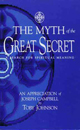
The Myth of the Great
Secret: An Appreciation of Joseph Campbell.
This
was the second edition of this book.
Toby Johnson's
titles are
available in other ebook formats from Smashwords.
|
Two Spirits -- Reviews
About reviews: I think to a writer the
best comments always have to do with the book being compulsive reading
("I couldn't put it down") and with it bringing tears!
I've gotten several such informal, personal "reviews" from readers.
 Recently
I've gotten email from Portland-based gay performance artist, singer,
and playwright/producer Wade
McCollum (his most recent album "Beauty is a Streelight"--lovely
music--available from iTunes). Recently
I've gotten email from Portland-based gay performance artist, singer,
and playwright/producer Wade
McCollum (his most recent album "Beauty is a Streelight"--lovely
music--available from iTunes).
Wade wrote: "Can I tell you how many
times
I cried reading TWO SPIRITS? SO beautiful... like coming
home."
New York writer John Caminiti wrote: "I just finished
reading "Two
Spirits" and I wanted to say that I found it to be one of the most
moving
novels I have read in a very long time. . . It is still
resonating with me.
I can't get some of it out of my mind. I had a very similar feeling
when
I read Song of the Loon. Both books spoke to me in very deep
emotional ways.
Published Reviews: TWO
SPIRITS
From a WONDERFUL review on
Jessewave by Cole:
"Lastly, I want to
encourage those of you
who, although you might think that this story sounds wonderful, are
afraid to read it. It is true that this story is far from a typical
story in the M/M genre, but the two essential things that make up a
romance are present here: a sweeping love story and a HEA [Happy Ever
After]. Yes, I admit I cried several times while reading this, often in
frustration and sometimes with joy. I won’t say that it was an easy
story to read, because it isn’t. I often had to put this book down and
take it up later. But that was the key: I always wanted to pick it back
up. And more than anything, I felt like I took a journey with the
characters and they became my friends. What more can you ask for in a
book?"
by Blondie at Rainbow-reviews.com:
"What can I say about this book. It was AWESOME. I
felt like I was there among the Dine, in the Sweat Lodge, in Santa Fe
watching Joelle sing. I could see the mountains and feel the hot air
and all the glory of the Southwest. I would highly recommend this book
for anyone who loves historical fiction with gay characters in it. I'd
give this book 10 stars if I could, but definitely 5 stars."
by "Betty Conley"
ElizConley@aol.com elizconley
Mon Aug 21, 2006
Two Spirits: A
Story
of Life With the Navajo
By Walter L. Williams and Toby Johnson
Lethe Press 2006 $18.00
Set in the New Mexican Territory in the Civil War
era, TWO SPIRITS focuses on a little known and shameful fact of
American history. Thousands of Navajo Indians, who refer to themselves
as Diné, were held in US Government sanctioned concentration
camp-like captivity, at Fort Sumner, from 1864 to 1868. Walter L.
Williams, Ph.D. and Toby Johnson, Ph.D. combined their knowledge and
talent
to pen a historically accurate fictional account of the
Diné's incarceration.
TWO SPIRITS' factual story line centers around the
callous treatment the Diné suffered under the supervision of
the righteous Union General James Carlton. Carlton, an Indian fighter,
devised a plan to relocate almost twelve thousand "savages" from their
fertile homeland at Canyon de Chelly (now northeast Arizona), to the
Bosque Redondo outside Fort Sumner. The Diné were forced to
walk a distance of 325 miles, in winter, with insufficient wagons to
carry
the young, old, and infirm. More than three thousand people died en
route to the desert area. Carlton's Indian "experiment" had the
support of officials in Washington who wished the Indians
pacified. The officials saw to it that sufficient funds for food
and housing for the Diné were regularly sent to Fort Sumner.
The funds, unfortunately, made General James Carlton a wealthy
man. During the Diné's four years of captivity without
government subsidies, and unable to grow crops in the arid soil,
another
quarter of their population died. The vulnerable Diné were
also victims of raids by the New Mexicans. General Carlton never
ordered the
soldiers to defend his charges against these attacks.
Adding appeal and fast pace to TWO SPIRITS' plot,
Williams and Johnson developed a beautiful love story between a
young Virginian, William Lee, and a high ranked Diné,
Hasbaá. Will had been shunned by his fundamentalist preacher father
after being found
in a barn with another young man. With the advice and help of an
influential townsperson, Will went to Washington, D.C. and was
fortunate to be hired as an apprentice Indian Agent. Assigned to
Fort Sumner, Will realized immediately that the Indians were poorly
treated, then learned the previous agent was dead. Feeling fully
responsible for the Indian's welfare, Will conscientiously wrote
reports to his superiors in Washington requesting additional aid
for the starving Diné. Will was not yet aware of Carlton's
duplicity.
Will frequently visited the Diné camp and
after proving himself worthy was accepted into their talk circle. He
became captivated with the spiritual person, Hasbaá. A two spirit
person, Hasbaá was honored and respected by the people. According to
Diné lore, people possessing two spirits were blessed with twice the
spiritual gifts, both male and female, and thus had special powers to
oversee healing rituals and other sacred ceremonies. Hasbaá
and Will grew close and fell in love. The Diné celebrated their
union, as was their custom.
Will discovered Carlton's treachery so with the help
of Hasbaá and other Diné, set out to prove Carlton's
unworthiness as leader. Some of Williams and Johnson's characters, such
as
General James Carlton, were actual people who played significant roles
in
the circumstances surrounding the Navajo's incarceration. In TWO
SPIRITS' pages, the authors show how spirituality, wisdom, and true
understanding of human nature existed among the native people of our
continent for thousands of years before European settlers arrived.
Williams and
Johnson's TWO SPIRITS is a very
important work with far reaching social significance. TWO SPIRITS is a
highly recommended five star read.
The Gay, Lesbian, Bisexual and Transgender
Student Support Services Library, located at Bloomington Indiana
by Sarah Stumpf
Do you like historical fiction? How about standing
up
to corruption, challenging racism, and falling in love?
Two Spirits: A Story of Life With the Navajo by Walter L. Williams and
Toby Johnson is one of the best fiction books I have read in a long
time. Johnson is an award-winning gay writer and Williams is an expert
in same-sex relationships among the Navajo (or Diné as they
prefer to be called). Together they create a beautiful work of fiction
that blends historical truth with compelling fictional characters.
Shortly after the Civil War Will Lee arrives in the harsh desert of New
Mexico to be the new Indian Agent at Fort Sumner and to escape his
fire-and-brimestone father. He quickly finds himself captivated by
Hasbaá, a Diné two-spirit, a man who lives like a woman
and has a sacred role in the community. Her gender transitiveness
fascinates and frightens him, as he is forced to examine himself, his
spiritual beliefs, and his place in this world.
Is he falling for her? Can he help expose the corruption of the Army
officials in charge of the fort as well as face his own racism? Is he
willing to give up the privileges of being a ’straight’ white man to
live in the Diné’s world? And would she even have him if he was
able to get over his own issues?
You could call this book gay fiction or trans fiction, but the labels
don’t matter as much as the strong characters, sexual and sensual
relationships, beautifully harsh settings, and historical realism that
William and Johnson are able to create.
Washington Blade (Aug 8,
2006)
Exploring a spiritual history (Gay)
New novel about a gay Navajo and his white lover
examines gay identity
By GREG MARZULLO
Tuesday, August 08, 2006
The history of gay identity on the North American continent is totally
absent from the educational system of the United States, and until
recent years, the travails of the American Indians have been reduced to
the myths of the bloodthirsty Injun or the noble savage.
With "Two Spirits: A Story of Life With the Navajo," gay authors Walter
L. Williams and Toby Johnson deftly unveil the great histories of gay
people as seen through the mythic and cultural expressions of the
Navajo.
The novel is set shortly after the end of the Civil War, when Will Lee,
a white Virginian, runs away from home upon being discovered naked with
his best friend by his stridently religious father. Will joins up with
the Office of Indian Affairs and heads out West to his new post at Fort
Sumner, New Mexico.
The Navajo were forced to live in the parched desert surrounding Sumner
after the U.S. Army drove them from their ancestral lands in what is
now northern Arizona. The tribe remained at the fort as prisoners from
1863 until 1867 when they were restored to their homelands.
While there, Will falls in love with Hasbaá, a "two spirit"
shaman of the tribe.
"The Navajo as well as many other American Indians honored people --
who we today would call gay -- as spiritually gifted,” says Johnson.
"They were understood to possess both the spirit of a man and the
spirit of a woman.”
Two spirit people usually displayed signs of gender variance by
dressing in clothing that was opposite of their biological gender and
engaging in activities that were nontraditional for their gender. They
held a spiritual position of honor within the community and worked as
healers and intermediaries between the human and spirit worlds.
"The way America thinks of homosexuals is not as spiritual leaders,"
says Johnson, 61. I think in the long run it's more important that gay
people change how we understand homosexuality than it is how we get
straight people to change their minds about it."
THE AWAKENING OF gay consciousness, one of the book's central themes,
is nothing new to the writings of either author. Johnson's nonfiction
works "Gay Spirituality" and "Gay Perspective" have become classics in
the queer spirit genre, and Williams, currently a senior professor in
the gender studies program at the University of Southern California,
wrote a seminal book on the two spirit phenomenon titled "The Spirit
and the Flesh: Sexual Diversity in American Indian Culture."
Both writers seamlessly weave their academic backgrounds into the
fabric of Will's and Hasbaá's story. Surrounded by the culture
and myths of the Navajo people, Will begins to embrace his sexuality as
a vehicle toward liberation, happiness and a deepening sense of
empowerment.
"One of the great mythological patterns is that people become heroes
not because they set out to be a hero, but because they got drawn into
it because of personal drive," says Johnson. "Those personal drives are
more sexual most of the time. In writing a gay story, we wanted to be
more open about the sexuality.
Researchers like Williams have determined that two spirit shamans
regularly engaged in same-sex eroticism and even married their
paramours.
"Same-sex marriage is as American as apple pie," Johnson laughs. "On
American soil, there has been same-sex marriage for 5,000 years. It's
the Christians who came along and objected 200 years ago. They're the
new ones."
Book Marks, Sept 25, 2006
Review by Richard Labonte
Two Spirits: A Story of Life with the Navajo,
by Walter L. Williams and Toby Johnson. Lethe Press, 332 pages, $18
paper
Cliched passion between the Sensitive White Man and
the Noble Savage has been a subset of gay romantic and erotic fiction
since Richard Amory's Song of the Loon set the standard almost
five decades ago. The bar has been raised much, much higher by this
compassionate collaboration between academic Williams, whose scholarly The
Spirit and the Flesh explored sexual diversity in American Indian
culture, and novelist Johnson, whose several books blend gay fiction
with spiritual wisdom. Their enchanting and suspenseful romance, set in
Navajo-territory New Mexico shortly after the Civil War, eschews those
unfortunate cliches: the young Virginian and the two-spirit native who
come to love each other here are fully dimensional characters. The
story hews closely to real history, too, as it recounts the callous
eviction of the Navajo from their sacred homelands, a shameful era of
cultural oppression and brutal discrimination in America. Two
Spirits bristles with an angry depiction of regrettable history,
but any hint of didactic overload is totally tempered by fine writing.
RFD, Winter 2006-07
Review by B
Two Spirits, A Story of
Life
with the Navajo
by Walter L. Williams & Toby Johnson
Lethe Press, 331 pages, 2006
"Two Spirits, A story of Life With the Navajo", is an
eminently accessible novel. It is written with joy and sensitivity and
successfully evokes the post-Civil War era. In addition, it offers a
lucid and simple (at times almost too simple) view of Dine (the word
the Navajo peoples have for themselves) spirituality and the unique
role of the Two Spirit people in Dine culture.
In the first three chapters we are introduced to the hero,
Will Lee (a distant relative of Robert E.) who arrives at Ft. Sumner NM
to take up duties as an apprentice to the Indian Agent. Following
chapters alternate between his earlier life in Virginia and his
experiences at the Fort. Will, we learn, has had some questions about
his sexuality; had a brief romantic/ sexual experience with his best
friend, Michael; and is discovered just after the act by his
Bible-thumping father with the expected dire consequences. Michael
escapes to Norfolk to follow his dream of becoming a sailor; and Will,
through the intervention of a local lawyer is given a copy of Walt
Whitman's recently published "Leaves of Grass"; given a letter of
introduction to the lawyer's friend in the Department of the Interior
and encouraged to escape to Washington, D.C. where he is assigned to
the post at Ft. Sumner.
Through this devise of alternating episodes between
his earlier life and life at the fort, a picture of a sensitive and
caring, though confused young man emerges. He meets, and is very
attracted to Hasbaa, a Dine Two Spirit spiritual leader of his/her
people. Will is appalled at the destitute conditions to which the Dine
are subjected by General Carlson, the Fort Commander, and gradually
discovers the extent of the General's perfidy.
Love blooms between Will and Hasbaa and as he learns about
the Dine life and spirituality the reader gains a clear picture of the
profound reverence for life and the joyous and innocent sexuality
evidenced by the people. The device works well and the adventure
provided by the pursuit and ultimate downfall of Gen. Carlson and the
return of the Dine to their homeland makes for a satisfying tale.
If you are interested in Native American
culture and
spirituality I highly recommend" Two Spirits". It will be a treasured
addition to your library.
Midwest Book Review Dec. 2006
by Lori L.
Lake, author
This is the first work
of
fiction I've
read that speaks about the world of the berdache with such clarity,
depth,
and soulfulness. The novel draws much of its historical fact and
information
from Walter L. Williams' nonfiction book THE SPIRIT AND THE FLESH:
SEXUAL
DIVERSITY IN AMERICAN INDIAN CULTURE, but despite its historical base,
the
book never feels dry. Instead, it is lively, entertaining, and a
fascinationg
look at a time gone by when two people from completely different
cultures
came together as friends, lovers, and trusted allies to prevail over an
enemy
that seemed impossible to defeat. Highly recommended.
Ashe Journal Vol 5, Issue 4
Also from Toby Johnson, this time joined by
anthropologist Walter
Williams, comes a new work of historical fiction: Two Spirits: A Story
of Life With the Navajo (Lethe Press, 2006, 331pp, $18.00). Set in the
Civil War era of the 1860’s, Two Spirits tells the story of a feckless
Virginian who finds himself captivated by a Two-Spirit male. This is a
fascinating book that combines tragedy and oppression with a tale of
love, beauty and self-discovery.
Barnes & Noble.com
This book I
could not
put down, with its visual beauty and its base in historical
truth, I found it enthralling. I am most grateful to learn yet
another piece
of who we are, and understand more fully why we are here.
--- Craig A. Lee
Lambda Book Report
Winter
2007
BY THOM NICKELS
Novels are generally written by one author, but Two Spirits: A Story of Life with tlte
Navajo, is co-authored by Walter L. Williams and Toby Johnson.
Williams. of course. is known for his classic overview of Native
American sexuality. The Spirit and the Flesh, a must-read for anyone
interested in American (sexual) history or Native American life. In
that work Williams explains the dynamics and the ways of the berdache,
or the Two Spirited-third gendered male. usually gay, who would often
dress as a member of the opposite sex, take a husband or wife (Two
Spirited persons were male or female) and live among the tribe as a
shaman or holy per-son. As a link between male and female. such persons
were thought to have the ability to tap into mystical realms. and to
create power-ful influences among the tribe.
Toby Johnson, the author of a number of spiritual books and former
editor of White Crane Journal, a gay men's journal of spiritu-ality, is
a logical choice to team with Williams. Being on the same page
spiritually would indeed be a prerequisite for such a venture.
The novel follows the adventures of Will, a young son-of-a--preacher
man who runs away from home after his father discovers him in the arms
of his best friend, circa 1868, in—as it turns out—-a not so secret
hayloft in the family barn.
Will runs away from home because he fears for his life and be-cause his
preacher father (a 19th century version of the Religious Right) seeks
to make an example of him before the congregation. Will feels that his
father will hang him although at one point he contemplates hanging
himself. He alters course when he runs to a family friend, an older
unmarried man and
Walt Whitman devotee, who lectures him on the value of people who are
"different." Although homosexuality or same sex attrac-tion is never
mentioned per se. the old man talks to Will about the love of comrades,
and Will. if only subliminally, gets the message. The old man also
suggests that WiIl leave home immediately for Washington D.C. to see a
friend of his in the government who might be able to get him a job.
This promise of employment is the springboard for Will's new life, and
he ven-tures forth into the bureaucratic labyrinths of Washington D.C.
where his introduction pays off. The old man's network of "secret
comrade friends" helps the young man ob-tain the dangerous yet exciting
job as an
Indian Agent. What follows is the story of how young Will travels to
the displaced homeland of the Navajo people (who yearn for their
original home in New Mexico) and how he slowly integrates himself into
their community.
On the reservation Will encounters top military brass hostile to Native
American interests; indeed, all the standard anti-Indian prejudices of
the day are in full bloom there. Complicating matters, Will meets the
Navajo Two Spirit, Hasbaa, and begins a personal odyssey of self
discovery. His fascination for Hasbaa leads eventual-ly to a
consummated love relationship or marriage within the tribe that has
dire consequences for Will both personally and profession-ally.
The authors' acute eye for historical detail and fact make this a
historical novel worth reading. This combination adventure story.
history lesson, and love story/soap opera are as compelling as the
early novels of Herman Hesse. While the straightforward narrative can
sometimes have a "young adult" feel, the book is a page turner
nonetheless, even if the grafting of erotic sequences and history
lessons sometimes have the feel of self conscious constructions.
In the description of Will's making love to a Two Spirit Mexican before
making his commitment to Hasbaa. we read:
As his kiss deepened, everything went out
of Will's mind. He felt himself go all to jelly as his muscles began to
move on their own as by reflex. His testicles contracted, and the
warmth deep inside moved upward and out onto his belly against Jose's.
He shuddered and convulsed in pleasure like never before.
In passages like these, this reader sensed an awkward confluence or
clash of two writing styles.
Reading these explicitly erotic passages is a little bit like taking a
supersonic transport from the 19th to 21st century. In one erotic dream
sequence we read how "Hasbaa sucked and caressed Will's cock with her
tongue," and how Will. getting it from behind in a menage-a-trios dream
fantasy, felt "himself filled with the warrior's maleness and that that
maleness was being pumped into him in this act. "
Eroticism is fine but here it feels very much out of place. The authors
fare much better in their descriptions of the private rela-tionship
lovemaking of Hasbaa and Will. This is perfectly in context in this
historically im-portant and even beautiful story.
Thom Nickels is a
Philadelphia-based author/journalist/ playwright. and the author or
eight published books including Out
in History and
Philadelphia Architecture.
An Exceptional
Spiritual Adventure in Cross Cultural Love
June 14, 2007
By Fred Stewart
I found Two Spirits to be a
delightful and entertaining book bringing
together compelling history,
culture, romance, and spirituality. The
authors vividly tell the
story of the historical plight of the Navajo
(Dine) tribe forced to
languish in an extremely hostile environment
far away from their homeland
in an experiment in Indian management" by
the U.S. military following
the Civil War.
The writing is lucid and the
characters are exceptionally
well-developed. I readily
experienced the hardships and the profound
spirituality of the tribe as
I entered their world and joined the
journey. The tribal ways,
rituals, and governing are rich in detail. I
became aware that under the
horrendous hardships the tribe managed to
maintain an enduring sense
of human hope, trust, and love. Tribal
members displayed this love
and trust for each other and their
spiritual leader. The
eventual acceptance of the "hairy face" (as the
Native Americans referred to
white men) into the tribe's midst is a
lesson of tolerance and
acceptance, especially when contrasted by the
ugliness of discrimination
practiced by the tribe's so-called
'protectors'.
Two Spirits is a must read
for anyone who seeks to understand an
aspect of Native American
culture that has been denied far too long.
GAY SHAMANS AS HEROES
AND WARRIORS
A Book Review by Lewis
Elbinger
Walter L. Williams and Toby Johnson, Two Spirits: A Story of Life with
the Navajo,
Lethe Press, New Jersey, 2006, 331 pages
Some books have veils over them. That means
you cannot read them until you are ready for the message contained
therein. Two Spirits: A Story of Life with the Navajo was such a
book for me. I bought it immediately after it was published, but
it sat on my shelf for almost a year before the veil was lifted and I
could enter the world the authors created and described.
Perhaps the barrier that prevented me from plunging
into this novel of American frontier life in the 1860s was the harsh
and accurate description of the injustices suffered by the Native
Americans at that time. I found the situation too painful to
contemplate and refused to do so. When the veil was finally
lifted, I was surprised and delighted to find a plot that veered from
comedy to horror and back with an underlying message of hope, triumph
and redemption. At one point I was moved to tears by the
magnificence of the characters and the skillful manner in which they
were portrayed. That, the shedding of a joyful tear evoked by
artistic talent, is the surest sign for me that the authors have
succeeded in their mission.
This book reminded me once again of the power of
fiction to reflect and affect the so-called "real world." Toby
Johnson literally wrote the book on gay spirituality (Toby Johnson, Gay Spirituality, Lethe Press, New
Jersey, 2004, 296 pages). Here, with co-author Walter Williams,
he delivers a message about the beauty, power and glory of gay shamans
in the guise of historical fiction. The book has several levels:
it is a story about the love between two men from radically different
worlds, about the differences between those worlds and, ultimately,
about the reconciliation of those worlds. The plot hinges on
historical characters, situations and places, but incorporates a
variety of elements, including magical realism, that make the story
memorable, interesting and exciting.
The word "Navajo" is the Spanish name of a Native
American tribe that calls itself Dine which means "the people."
In the 1860s, the Dine suffered a devastation comparable that
experienced by the Jews in Nazi Germany. They were forcibly
deported from their homeland and relocated to a barren track of land
outside of Fort Sumner in what is currently New Mexico. Their
violent resistance to this deportation provided the excuse for further
oppression. With little food, water or shelter, people died by
the thousands. Eventually, the Dine made a treaty with the U.S.
government that allowed them to return to their homeland from the brink
of extinction.
Certain heroic and decent personalities among both
the Dine and U.S. government facilitated this fortuitous
conclusion. In this fictionalized version of the story, Williams
and Johnson posit a love affair between a young Indian Agent from
Virginia named William Lee and a Dine nadleehi (gay shaman) named
Hasbaá. While the plot contains the heart-pounding twists
and turns of an exciting movie, the underlying message of the book is
William Lee's discovery, understanding and acceptance of Dine holistic
and humane cosmology in contrast to the cosmology of his own tribe of
rapacious and callous Americans. The love between Lee and
Hasbaá served as a bridge between two utterly diverse and
hostile cultures. This love allowed healing, growth and
understanding to develop in an atmosphere in which only violence,
oppression and cruelty flourished.
Love exists on four levels: physical, emotional,
mental and spiritual. It was the spiritual bond between the white
American and the red Native American that drew them together and
allowed them to foster reconciliation between their antagonistic
societies. William Lee's curiosity and fascination with Dine
culture and religion in general and with Hasbaá's exalted
position as a religious figure in that culture in particular opened a
window onto a world which was closed to most white Americans. The
reader is privileged to gaze over Lee's shoulder as he peers into the
forbidden and foreign world that most of Lee's compatriots considered
savage and barbaric. One wonders who is the savage and who is the
barbarian when the truth is known about the values and behaviors of
each society.
One message of Toby Johnson's considerable literary
output is that the homosexual perspective makes a valuable and
necessary contribution to the evolution of human consciousness.
This book presents the same idea in an entertaining, interesting and
enlightening way. After finishing the book, I bought three copies
of it as gifts for friends who would appreciate the concept of same-sex
love as a vehicle for intercultural understanding.
TWO
SPIRITS REVIEW
by Ruth Sims
Two Spirits combines a moving love story with a dark part of American
history. Most American know, and choose to ignore, the historic
treatment of the peoples who “were here first,” the broken treaties,
the broken promises, the broken hearts and lives. It would be silly to
pretend that the Indians (if I may use that non-p.c. term) didn’t war
among themselves because they did. But they didn’t have machine guns
and railroad trains and the belief that God gave them all the land from
coast to coast, a.k.a. “manifest destiny.” Two Spirits is about one
small group caught on the dark side of that manifest destiny: the
people Americans called Navajo, but who called themselves Diné.
In 1864 the Diné were forced to walk 325 miles in winter from
their green, fertile homeland in what we call Northeast Arizona, Canyon
de Chelly, to what was actually a concentration camp at Bosque Redondo
near Fort Sumner. At least 3,000 of their number died on the way. This
was General James Carlton’s version of “pacifying” the natives.
Carlton, by the way, was a real person. The U.S. Government allocated
what probably was sufficient money for the displaced Diné to
feed, clothe, and house them, but the money found its way into
Carlton’s private coffers. Not only were the Diné starving and
unable to grow crops in the inhospitable land, living in substandard
shacks, and dying from illnesses, Mexican bandits regularly struck from
what became New Mexico, carrying the Diné children to be sold
into slavery. Carlton did nothing to protect his charges.
Into this living hell comes a shy, uncertain and untrained Indian Agent
named William Lee from Virginia, a young man kicked out by his father
for loving another man. Young Will is truly tested by many fires—both
from within and without. He’s puzzled why he’s fascinated and attracted
to the beautiful healer and wise woman, Hasbaá, a loved and
revered member of the tribe. A near-tragedy reveals Hasbaá’s
physical strength and Will soon learns that the beautiful, spiritual,
strong woman is really a man—a two-spirit. Far from being shunned, as
she would have been in white society, Hasbaá is considered
blessed. Will and Hasbaá fall deeply in love and are joined in a
union by the customs of the tribe.
There is plenty of action and danger in this book, as Will, the
Diné, and Hasbaá face persecution and annihilation when
Will uncovers Carlton’s corruption and evil. He delves deeply into the
life and spirituality of the Diné and his beloved Hasbaá.
As an incurable reader of forewords, afterwords, and footnotes, I
especially appreciated the commentaries at the end. “About the
Historical Accuracy of This Novel” is as interesting as the book
itself, explaining as it does about, among other things, the use of
peyote, some of the mystical references, and the acceptance of
two-spirit people. This is followed by “A Commentary” by Wesley K.
Thomas, a member of the Diné. These brief extras are the cherry
on top of the sundae.
Highly recommended!
Ruth Sims is author of the wonderful romance novel The Phoenix
From
amazon.com
Two Spirits: A Story of the Life With the Navajo,
November 5, 2006
By John W. Burkert (LA, CA)
As an acquaintance of Professor Williams through having read some of
his other books, I highly recommend the reading to any others
interested in the Southwest Indiam culture. This is true history with a
mix of touching fiction.
Little Known Americana, September 28, 2007
By Amos Lassen (Little Rock, Arkansas
Little Known Americana, "Two Spirits" is set in the territory of New
Mexico during the period that America was engaged in the Civil War. The
book focuses on a piece of American history that few know of--thousands
of Navajo Indians (referring to themselves as "Dine") were held in a
concentration camp which was sanctioned by the government of the United
States at Fort Sumner. The authors, Walter Williams and Toby Johnson
have taken this and written a historical novel about what happened.
The true story of what happened reads like this. The Navajo were
treated with callousness and suffered untold indignities under the
supervision of the "righteous" Union general, James Carleton...
Williams and Johnson took the story and added a love angle between
William Lee, a young man from Virginia and a Dine of high rank by the
name of Hasbaa. ...
I love historical fiction and "Two Spirits" is such a book. It is well
written and the characters are unforgettable. The way the ceremonial
acts of the Dine is depicted is sheer reality. It is easy to see the
authors' passion for their material. The novel is based on real history
buy it is the characters and their way of life and spirituality that
makes this book such a treasure. This book is part of American history
regardless of the shame it provides. Even though the book is
categorized as fiction, the accounts are historically accurate. It
brings together compelling history with spirituality, culture and
romance and the writing is both literate and lucid. The history of the
Native American has been hidden from us for a long time but with this
book we get a glimpse of what really went on. History can often be dry
but this book never does.
Two Souls October 4, 2008
By Ruth Thompson "Booksmania" (Venice Florida)
The setting of this book is Fort Sumner where the Navajo Indians were
kept in captivity by our government…. This is an interesting book that
is filled with facts of the Navajo's way of life.
Ruth Thompson is the author of "The Blue grass Dream: A Wilderness
Adventure of Early Settlers” and “Natchez Above The River: A Family's
Survival In The Civil War”
Two Spirits: A Story of Life With the Navajo, June 30,
07
By Waneta Falcon "Love to read" (Seattle, WA USA)
This is one of those books you just can't put down. Although it's
categorized as fiction, there are historically based non-fiction
accounts blended in. I highly recommend this book for all ages.
|