|
Contact Us Table of Contents Search Site Google listing of all pages on this website Site Map Toby Johnson's Facebook page Toby Johnson's YouTube channel Toby Johnson on Wikipedia Toby Johnson Amazon Author Page  Secure site at https://tobyjohnson.com  Also on this website: As an Amazon Associate
I earn from qualifying purchases. Toby Johnson's books: Toby's books are available as ebooks from smashwords.com, the Apple iBookstore, etc. FINDING
YOUR OWN TRUE MYTH: What I Learned
from Joseph Campbell: The
Myth
of the
Great Secret
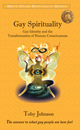
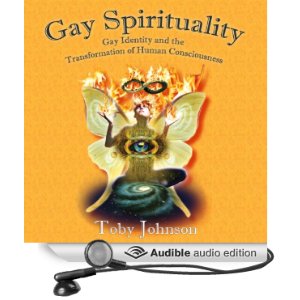
III GAY SPIRITUALITY: The Role of Gay Identity in the Transformation of Human Consciousness
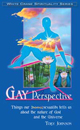
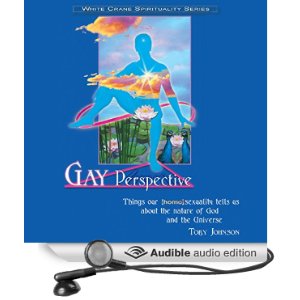
GAY PERSPECTIVE: Things Our Homosexuality Tells Us about the Nature of God and the Universe
SECRET MATTER, a sci-fi novel with wonderful "aliens" with an Afterword by Mark Jordan
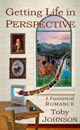
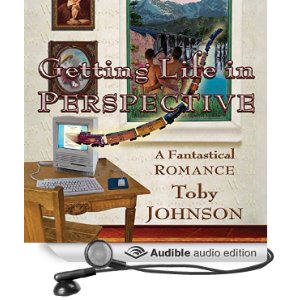
GETTING
LIFE IN PERSPECTIVE:
A
Fantastical Gay Romance set in two different time periods
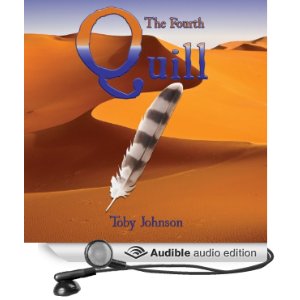
THE FOURTH QUILL, a novel about attitudinal healing and the problem of evil  TWO SPIRITS: A Story of Life with the Navajo, a collaboration with Walter L. Williams  CHARMED LIVES: Spinning Straw into Gold: GaySpirit in Storytelling, a collaboration with Steve Berman and some 30 other writers
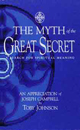
THE MYTH OF THE GREAT SECRET: An Appreciation of Joseph Campbell
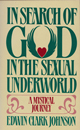
IN SEARCH OF GOD IN THE SEXUAL UNDERWORLD: A Mystical Journey
Books on Gay Spirituality: White Crane Gay Spirituality Series
Articles and Excerpts:
Review of Samuel Avery's The Dimensional Structure of Consciousness Funny Coincidence: "Aliens Settle in San Francisco" About Liberty Books, the Lesbian/Gay Bookstore for Austin, 1986-1996 The Simple Answer to the Gay Marriage Debate A Bifurcation of Gay Spirituality Why gay people should NOT Marry The Scriptural Basis for Same Sex Marriage
Gay ConsciousnessQ&A about Jungian ideas in gay consciousness What Jesus said about Gay Rights Common Experiences Unique to Gay Men Is there a "uniquely gay perspective"? Interview on the Nature of Homosexuality What the Bible Says about Homosexuality Mesosexual Ideal for Straight Men Waves of Gay Liberation Activity Wouldn’t You Like to Be Uranian? The Reincarnation of Edward Carpenter Why Gay Spirituality: Spirituality as Artistic Medium Easton Mountain Retreat Center Andrew Harvey & Spiritual Activism The Mysticism of Andrew Harvey
Enlightenment
Joseph Campbell's description of Avalokiteshvara You're Not A WaveJoseph Campbell Talks about Aging What is Enlightenment? What is reincarnation? How many lifetimes in an ego? Emptiness & Religious Ideas Experiencing experiencing experiencing Going into the Light Meditations for a Funeral Meditation Practice The way to get to heaven Buddha's father was right What Anatman means Advice to Travelers to India & Nepal The Danda Nata & goddess Kalika Nate Berkus is a bodhisattva John Boswell was Immanuel Kant Cutting edge realization The Myth of the Wanderer Change: Source of Suffering & of Bliss World Navel What the Vows Really Mean Manifesting from the Subtle Realms The Three-layer Cake & the Multiverse The est Training and Personal Intention Effective Dreaming in Ursula LeGuin's The Lathe of Heaven Gay
Spirituality
|
 The Way
Out: The Gay Man’s Guide to Freedom No Matter If You’re in Denial,
Closeted, Half In, Half Out, Just Out or Been Around the Block The Way
Out: The Gay Man’s Guide to Freedom No Matter If You’re in Denial,
Closeted, Half In, Half Out, Just Out or Been Around the BlockBy Christopher Lee Nutter Health Communications, Inc, 189 pages, paperback, $14.95 Available from amazon.com The Way Out: The Gay Man's Guide to Freedom No Matter if You're in Denial, Closeted, Half In, Half Out, Just Out or Been Around the Block  Reviewed by Toby Johnson Part edgy memoir, part social criticism, part spiritual writing, The Way Out is Christopher Nutter’s account of his journey from closeted, nerdy Alabamian to hot and sexy New York gay bartender and party boy, to jaded and unhappy victim of gay club culture glitz, to spiritual seeker and exponent of gay wisdom. There are not a lot of details of Nutter’s autobiography in the book; the book isn’t about him. But his personal story provides the framework within which to share the insights he has gained over his twelve years as an explorer of urban gay life. There’s just enough personal anecdote, from his own life and from that of friends he cites, to keep the wisdom grounded, and the insights identifiable and personal. Chris Nutter grew up in straight middle-America, in his case in Birmingham, Alabama, in the 70s and 80s. As a child, he was depressed and withdrawn, he tells, because he didn’t feel attractive enough or masculine and self-confident. Once he got to college, he began to remedy his sense of physical and personal inadequacy by going to the gym, changing his look, and acting the role of privileged pretty boy. But he was still in denial of his sexual feelings. So it was a monumental shift in his life when in 1993 he decided to take control of his own destiny. He dropped his plans for law school to do what he wanted to do, which was to be a writer, came out gay, took a magazine internship job in Boston, and, most significantly, initiated his new identity by writing an article for Details magazine about life in the closet. He burst out of his own closet on a national scale. And was met with almost universal acceptance. As he tentatively explored the gay sub-cultural world of the big cities, he discovered gay club culture: “gorgeous, glamorous gay men with hot bodies.” He threw himself into that world. He scored a job as a bartender at a famous gay bar, wrote for a gay magazine, posed for classy homoerotic photography. So by the standards of that glitz gay club culture, he’d made it. He was one of those men with the hot bodies. He could do attitude and fuck like it was an athletic sport. But he still wasn’t happy. He observes that “coming out of the closet is usually thought of as the singular answer to the gay ‘predicament.’” But then the gay world just takes over your mind and fills your head with yet another false reality about who you are. It’s a solution, but only part of the whole solution, a step in the right direction, but only a step. There remains the deeper question of who you really are. And this is a spiritual question. Intermixing themes in current spiritual thought--the Dalai Lama, Joseph Campbell, Don Miguel Ruiz, Gary Zukav, A Course in Miracles, the Twelve Steps-Nutter offers an answer to who you really are. And in the process recounts how he came to understand this through his experience in urban gay culture. The answer, of course, isn’t new or surprising. It’s the age-old answer: we are each a perspective that “God” or “Divine Consciousness” or “the cosmos”--whatever you want to call IT--is taking on itself. We are not separate beings, competing and fighting with one another. We are each other and so it’s ok to tell the truth, it’s ok to let go of fear, it’s ok to love and respect other human beings as expressions of the divine consciousness. Nutter identifies five steps in changing one’s life: Decide to Heal; Recognize Your Pain as Your Pain; Look For How You Cover Up or Avoid Your Pain; Refrain From Reacting, Feel Your Pain and Learn What Is Causing It; and Correct Your Vision. These describe the dynamics of psychotherapy and consciousness-raising, but presented in identifiable terms, based in modern day experience. They also echo the Buddha’s Four Noble Truths. Chris Nutter’s articulation of this wisdom is fresh and current. He speaks with the voice of his generation and in a way that makes this revolutionary mystical wisdom seem obvious and inevitable—even though it is life-altering. And he derives his wisdom from his gay experience not in repudiation or rejection of it. Nutter is a little judgmental about that glitzy gay club culture. There certainly is justification for this. The club culture/ gay bar culture/sexual underworld can be alluring, then addicting, then destructive. Some men’s lives are ruined by drugs and alcohol and compulsive sex. Some men need “the way out” from the gay world, just as they had earlier needed “the way out” of the closet. For most gay men, I think, this comes about as simply the natural development of growing older and changing priorities. But even for those who are just naturally growing up, a book like this can be immensely helpful. We all go through those five steps whether we know it or not. It helps to know it and to have some guidance in understanding where the process is going. It’s refreshing to discover a book like this coming from the youth generation of today. It’s one thing when these ideas about mature gay consciousness come from psychiatrists and professional spiritual writers. It’s quite another--much more immediately accessible and believable--when it comes from one of those gorgeous, hot bartenders. Interesting, by the way, Nutter doesn’t use the word queer. There’s a welcome naiveté about the politicized terminology of the gay movement; this gives the book a feel of personal honesty and straightforwardness and makes it speak its wisdom that much more effectively. It is exciting--and concerning--that Chris Nutter has derived this wisdom and spiritual worldview on his own. It confirms the intuition that gay men are talented at designing worldviews and religions (as we are with flowers and furniture). This is the personal yoga of every one of us today: to create our own religion. What’s concerning is that he had to do it without the help of the generations of other gay spiritual seekers who’ve done it before him because their wisdom just isn’t readily available to the mainstream--and especially the gay club--culture. Our gay history keeps getting lost. It’s a symptom of collective homophobia--and how it gets expressed in mainstream gay culture--that young homosexuals seeking to overcome personal homophobia naturally resist instruction from older homosexuals out of the very homophobia they’re trying to overcome. This dynamic is familiar as the notion that homosexuals can’t be trusted to be accurate reporters on homosexuality because we’d be biased! As though personal experience and knowing whereof one speaks is a “bias.” Exacerbating the problem of passing gay wisdom down from one generation to another is that the very experience of realizing and accepting one’s own homosexuality usually is concomitant with realizing you can only trust your own counsel, everything you’ve been told about sexuality is wrong and you have to discover the secret truth yourself--in Buddhist terms, you’re on your own and nobody’s going to save you. So each generation of homosexuals begins by rejecting the past and distrusting all passed-down wisdom, whether it’s from their parents, their church and government or from gay community elders. (This manifests, of course, as the continual evolving of the “politically correct” name for the movement; every generation rejects the previous generation.) So in a way I have to think I’m sorry Chris Nutter had to go without the accumulated wisdom of the gay elders. Our community somehow needs to learn its historical continuity and “apostolic” succession and make this consciousness accessible to youth just joining us. But I am also quite proud of him for having made the perilous journey. I expect him to take his place among the new generation of gay leaders and luminaries. The Way Out is a good book. It’s easy to read, interesting and thought-provoking. Nutter’s presentation of the perennial wisdom is fresh and accessible. |
Toby Johnson, PhD is author of nine books: three non-fiction books that apply the wisdom of his teacher and "wise old man," Joseph Campbell to modern-day social and religious problems, four gay genre novels that dramatize spiritual issues at the heart of gay identity, and two books on gay men's spiritualities and the mystical experience of homosexuality and editor of a collection of "myths" of gay men's consciousness.
Johnson's book
GAY
SPIRITUALITY: The Role of Gay Identity in the Transformation of
Human Consciousness won a Lambda Literary Award in 2000.
His GAY
PERSPECTIVE: Things Our [Homo]sexuality Tells Us about the Nature
of God and the Universe was nominated for a Lammy in 2003. They
remain
in
print.





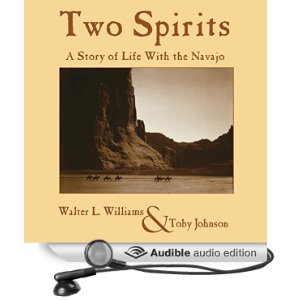 Two
Spirits is available as an
audiobook narrated by Arthur Raymond.
Two
Spirits is available as an
audiobook narrated by Arthur Raymond.