Contact Us
Table of Contents
Search Site
Google listing of all pages on this website
Site Map
Toby
Johnson's Facebook page
Toby
Johnson's YouTube channel
Toby Johnson on Wikipedia
Toby
Johnson Amazon Author Page

Secure site at
https://tobyjohnson.com
Also on this
website:
As an Amazon Associate
I earn from qualifying purchases.
Toby
Johnson's books:
Toby's books are available as ebooks from
smashwords.com, the Apple iBookstore, etc.
FINDING
YOUR OWN TRUE MYTH: What I Learned
from Joseph Campbell: The
Myth
of the
Great Secret
III
GAY
SPIRITUALITY:
The Role of Gay Identity in the Transformation of Human Consciousness
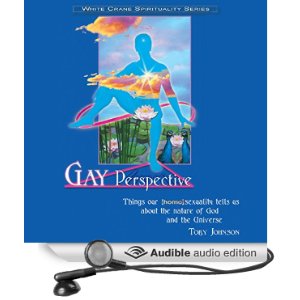
GAY PERSPECTIVE:
Things Our Homosexuality Tells Us about the Nature of God and the
Universe

SECRET MATTER, a sci-fi novel with
wonderful "aliens" with an
Afterword by Mark Jordan

GETTING
LIFE IN PERSPECTIVE:
A
Fantastical Gay Romance set in two different time periods

THE FOURTH QUILL, a
novel about attitudinal healing and the problem of evil

TWO SPIRITS: A Story of Life with
the
Navajo, a collaboration with Walter L. Williams

CHARMED
LIVES: Spinning Straw into
Gold: GaySpirit in Storytelling, a collaboration with
Steve Berman and some 30 other writers
THE MYTH OF THE GREAT
SECRET:
An
Appreciation of Joseph Campbell
IN SEARCH OF GOD IN THE
SEXUAL UNDERWORLD: A Mystical Journey
Unpublished manuscripts
About ordering
Books on
Gay Spirituality:
White
Crane Gay Spirituality Series

Articles
and Excerpts:
Review of Samuel
Avery's The
Dimensional Structure of Consciousness
Funny
Coincidence: "Aliens Settle in San Francisco"
About Liberty Books, the
Lesbian/Gay Bookstore for Austin, 1986-1996
The Simple Answer to the Gay Marriage Debate
A
Bifurcation of Gay Spirituality
Why gay people should NOT Marry
The Scriptural Basis for
Same Sex Marriage
Toby and Kip Get Married
Wedding Cake Liberation
Gay Marriage in Texas
What's ironic
Shame on the American People
The "highest form of love"
Gay Consciousness
Why homosexuality is a sin
The cause of homosexuality
The
origins of homophobia
Q&A
about Jungian ideas in gay consciousness
What
is homosexuality?
What
is Gay Spirituality?
My three
messages
What
Jesus said about Gay
Rights
Queering
religion
Common
Experiences Unique to Gay
Men
Is there a "uniquely gay
perspective"?
The
purpose of homosexuality
Interview on the Nature of
Homosexuality
What the Bible Says about
Homosexuality
Mesosexual
Ideal for Straight Men
Varieties
of Gay Spirituality
Waves
of Gay Liberation Activity
The Gay Succession
Wouldn’t You Like to Be Uranian?
The Reincarnation of
Edward Carpenter
Why Gay Spirituality: Spirituality
as Artistic Medium
Easton Mountain Retreat Center
Andrew Harvey &
Spiritual Activism
The Mysticism of
Andrew Harvey
The
upsidedown book on MSNBC
Enlightenment
"It's
Always About You"
The myth of the Bodhisattva
Avalokitesvara
Joseph
Campbell's description of
Avalokiteshvara
You're
Not A Wave
Joseph Campbell Talks
about Aging
What is Enlightenment?
What is reincarnation?
How many lifetimes in an
ego?
Emptiness & Religious Ideas
Experiencing experiencing experiencing
Going into the Light
Meditations for a Funeral
Meditation Practice
The way to get to heaven
Buddha's father was right
What Anatman means
Advice to Travelers to India
& Nepal
The Danda Nata
& goddess Kalika
Nate Berkus is a bodhisattva
John Boswell was Immanuel Kant
Cutting
edge realization
The Myth of the
Wanderer
Change: Source of
Suffering & of Bliss
World Navel
What the Vows Really
Mean
Manifesting
from the Subtle Realms
The Three-layer
Cake
& the Multiverse
The
est Training and Personal Intention
Effective
Dreaming in Ursula LeGuin's The Lathe of Heaven
Gay
Spirituality
Curious
Bodies
What
Toby Johnson Believes
The
Joseph Campbell Connection
The
Mann Ranch (& Rich Gabrielson)
Campbell
& The Pre/Trans Fallacy
The
Two Loves
The
Nature of Religion
What's true about
Religion
Being
Gay is a Blessing
Drawing Long Straws
Freedom
of Religion
The
Gay Agenda
Gay
Saintliness
Gay
Spiritual Functions
The subtle workings of the spirit
in gay men's lives.
The Sinfulness of
Homosexuality
Proposal
for a study of gay nondualism
Priestly Sexuality
Having a Church to
Leave
Harold Cole on Beauty
Marian Doctrines:
Immaculate Conception & Assumption
Not lashed to the
prayer-post
Monastic or Chaste
Homosexuality
Is It Time to Grow
Up? Confronting
the Aging Process
Notes on Licking
(July, 1984)
Redeem Orlando
Gay Consciousness changing
the
world by Shokti LoveStar
Alexander Renault
interviews Toby
Johnson
Mystical Vision
"The
Evolution of Gay Identity"
"St. John of the
Cross & the Dark Night of
the Soul."
Avalokiteshvara
at the Baths
Eckhart's Eye
Let Me
Tell You a Secret
Religious
Articulations of the
Secret
The
Collective Unconscious
Driving as
Spiritual Practice
Meditation
Historicity
as Myth
Pilgrimage
No
Stealing
Next
Step in Evolution
The
New Myth
The Moulting of the Holy Ghost
Gaia
is a Bodhisattva
The Hero's
Journey
The
Hero's Journey as archetype -- GSV 2016
The Gay Hero Journey
(shortened)
You're
On Your Own
Superheroes
Seeing
Differently
Teenage
Prostitution and the Nature of Evil
Allah
Hu: "God is present here"
Adam
and Steve
The Life is
in the Blood
Gay retirement and the "freelance
monastery"
Seeing with
Different Eyes
Facing
the Edge: AIDS as an occasion for spiritual wisdom
What
are you looking for in a gay science fiction novel?
The Vision
The
mystical experience at the Servites' Castle in Riverside
A Most Remarkable
Synchronicity in
Riverside
The
Great Dance according to C.S.Lewis
The Techniques Of The
World Saviors
Part 1: Brer Rabbit and the
Tar-Baby
Part 2: The
Bodhisattva Avalokiteshvara
Part 3: Jesus
and the Resurrection
Part 4: A
Course in Miracles
The
Secret of the Clear Light
Understanding
the Clear Light
Mobius
Strip
Finding
Your
Tiger Face
How Gay Souls Get Reincarnated
Joseph
Campbell, the Hero's Journey, and the modern Gay Hero-- a five part
presentation on YouTube
About Alien Abduction
In
honor of Sir Arthur C Clarke
Karellen was a homosexual
The
D.A.F.O.D.I.L. Alliance
Intersections
with the movie When We Rise
More
about Gay Mental Health
Psych
Tech Training
Toby
at the California Institute
The
Rainbow Flag
Ideas for gay
mythic stories
People
Kip and Toby,
Activists
Toby's
friend and nicknamesake Toby Marotta.
Harry
Hay, Founder of the gay movement
About Hay and The New Myth
About
Karl
Heinrich Ulrichs, the first
man to really "come out"
About Michael Talbot, gay mystic
About Fr. Bernard Lynch
About Richard Baltzell
About Guy Mannheimer
About David Weyrauch
About
Dennis Paddie
About Ask the Fire
About
Arthur Evans
About
Christopher Larkin
About Mark Thompson
About Sterling Houston
About Michael Stevens
The Alamo Business
Council
Our friend Tom Nash
Second March on
Washington
The
Gay
Spirituality Summit in May 2004 and the "Statement
of Spirituality"
Book
Reviews
Be Done on Earth by Howard
E. Cook
Pay Me What I'm Worth by
Souldancer
The Way Out by Christopher
L Nutter
The Gay Disciple by John Henson
Art That Dares by Kittredge Cherry
Coming Out, Coming Home by Kennth
A. Burr
Extinguishing
the Light by B. Alan Bourgeois
Over Coffee: A conversation
For Gay
Partnership & Conservative Faith by D.a. Thompson
Dark Knowledge
by
Kenneth Low
Janet Planet by
Eleanor
Lerman
The
Kairos by Paul E. Hartman
Wrestling
with Jesus by D.K.Maylor
Kali Rising by Rudolph
Ballentine
The
Missing Myth by Gilles Herrada
The
Secret of the Second Coming by Howard E. Cook
The Scar Letters: A
Novel
by Richard Alther
The
Future is Queer by Labonte & Schimel
Missing Mary
by Charlene Spretnak
Gay
Spirituality 101 by Joe Perez
Cut Hand: A
Nineteeth Century Love Story on the American Frontier by Mark Wildyr
Radiomen
by Eleanor Lerman
Nights
at
Rizzoli by Felice Picano
The Key
to Unlocking the Closet Door by Chelsea Griffo
The Door
of the Heart by Diana Finfrock Farrar
Occam’s
Razor by David Duncan
Grace
and
Demion by Mel White
Gay Men and The New Way Forward by Raymond L.
Rigoglioso
The
Dimensional Stucture of Consciousness by Samuel Avery
The
Manly Pursuit of Desire and Love by Perry Brass
Love
Together: Longtime Male Couples on Healthy Intimacy and Communication
by Tim Clausen
War
Between Materialism and Spiritual by Jean-Michel Bitar
The
Serpent's Gift: Gnostic Reflections on the Study of Religion by
Jeffrey J. Kripal
Esalen:
America and the Religion of No Religion by Jeffrey J. Kripal
The
Invitation to Love by
Darren Pierre
Brain,
Consciousness, and God: A Lonerganian Integration by Daniel A
Helminiak
A
Walk with Four Spiritual Guides by Andrew Harvey
Can Christians Be Saved? by Stephenson & Rhodes
The
Lost Secrets of the Ancient Mystery Schools by Stephenson &
Rhodes
Keys to
Spiritual
Being: Energy Meditation and Synchronization Exercises by Adrian
Ravarour
In
Walt We
Trust by John Marsh
Solomon's
Tantric Song by Rollan McCleary
A Special Illumination by Rollan McCleary
Aelred's
Sin
by Lawrence Scott
Fruit
Basket
by Payam Ghassemlou
Internal
Landscapes by John Ollom
Princes
& Pumpkins by David Hatfield Sparks
Yes by Brad
Boney
Blood of the Goddess by William Schindler
Roads of Excess,
Palaces of
Wisdom by Jeffrey Kripal
Evolving
Dharma by Jay Michaelson
Jesus
in Salome's Lot by Brett W. Gillette
The Man Who Loved Birds by Fenton Johnson
The
Vatican Murders by Lucien Gregoire
"Sex Camp"
by
Brian McNaught
Out
& About with Brewer & Berg
Episode One: Searching for a New Mythology
The
Soul Beneath the Skin by David Nimmons
Out
on
Holy Ground by Donald Boisvert
The
Revotutionary Psychology of Gay-Centeredness by Mitch Walker
Out There
by Perry Brass
The Crucifixion of Hyacinth by Geoff Puterbaugh
The
Silence of Sodom by Mark D Jordan
It's
Never About What It's About by Krandall Kraus and Paul Borja
ReCreations,
edited by Catherine Lake
Gospel: A
Novel
by WIlton Barnhard
Keeping
Faith: A Skeptic’s Journey by Fenton Johnson
Dating the Greek Gods by Brad Gooch
Telling
Truths in Church by Mark D. Jordan
The
Substance of God by Perry Brass
The
Tomcat Chronicles by Jack Nichols
10
Smart
Things Gay Men Can Do to Improve Their Lives by Joe Kort
Jesus and the Shamanic Tradition of Same Sex Love
by Will Roscoe
The
Third Appearance by Walter Starcke
The Last Hours of Ancient Sunlight by Thom Hartmann
Surviving
and Thriving After a Life-Threatening Diagnosis by Bev Hall
Men,
Homosexuality, and the Gods by Ronald Long
An Interview
with Ron Long
Queering Creole Spiritual Traditons by Randy
Conner & David Sparks
An Interview with
Randy Conner
Pain,
Sex
and Time by Gerald Heard
Sex
and the Sacred by Daniel Helminiak
Blessing Same-Sex Unions by Mark Jordan
Rising Up
by
Joe Perez
Soulfully
Gay
by Joe Perez
That
Undeniable Longing by Mark Tedesco
Vintage: A
Ghost
Story by
Steve Berman
Wisdom
for the Soul by Larry Chang
MM4M a DVD
by Bruce Grether
Double
Cross
by David Ranan
The
Transcended Christian by Daniel Helminiak
Jesus
in Love by Kittredge Cherry
In
the Eye of the Storm by Gene Robinson
The
Starry Dynamo by Sven Davisson
Life
in
Paradox by Fr Paul Murray
Spirituality for Our Global Community by Daniel
Helminiak
Gay & Healthy in a Sick Society by Robert A.
Minor
Coming Out: Irish Gay Experiences by Glen O'Brien
Queering
Christ
by Robert Goss
Skipping
Towards Gomorrah by Dan Savage
The
Flesh of the Word by Richard A Rosato
Catland by
David Garrett Izzo
Tantra
for Gay Men by Bruce Anderson
Yoga
&
the Path of the Urban Mystic by Darren Main
Simple
Grace
by Malcolm Boyd
Seventy
Times Seven by Salvatore Sapienza
What
Does "Queer" Mean Anyway? by Chris Bartlett
Critique of Patriarchal Reasoning by Arthur Evans
Gift
of
the Soul by Dale Colclasure & David Jensen
Legend of the Raibow Warriors by Steven McFadden
The
Liar's
Prayer by Gregory Flood
Lovely
are the Messengers by Daniel Plasman
The Human Core of Spirituality by Daniel Helminiak
3001:
The Final Odyssey by Arthur C. Clarke
Religion and the Human Sciences by Daniel Helminiak
Only
the
Good Parts by Daniel Curzon
Four
Short
Reviews of Books with a Message
Life
Interrupted by Michael Parise
Confessions of a Murdered Pope by Lucien Gregoire
The
Stargazer's Embassy by Eleanor Lerman
Conscious
Living, Conscious Aging by Ron Pevny
Footprints Through the Desert by Joshua Kauffman
True
Religion by J.L. Weinberg
The Mediterranean Universe by John Newmeyer
Everything
is God by Jay Michaelson
Reflection
by Dennis Merritt
Everywhere
Home by Fenton Johnson
Hard Lesson by James
Gaston
God
vs Gay?
by Jay Michaelson
The
Gate
of Tears: Sadness and the Spiritual Path by Jay Michaelson
Roxie
&
Fred by Richard Alther
Not
the Son He Expected by Tim Clausen
The
9 Realities of Stardust by Bruce P. Grether
The
Afterlife Revolution by Anne & Whitley Strieber
AIDS
Shaman:
Queer Spirit Awakening by Shokti Lovestar
Facing the Truth of Your Life by Merle Yost
The
Super Natural by Whitley Strieber & Jeffrey J Kripal
Secret
Body by
Jeffrey J Kripal
In
Hitler's
House by Jonathan Lane
Walking on Glory by Edward Swift
The
Paradox
of Porn by Don Shewey
Is Heaven for Real? by Lucien Gregoire
Enigma by Lloyd Meeker
Scissors,
Paper, Rock by Fenton Johnson
Toby
Johnson's
Books on Gay Men's Spiritualities:
Gay Perspective
Things Our [Homo]sexuality
Tells Us
about the
Nature of God and
the Universe
Gay
Perspective is available as an audiobook narrated
by Matthew Whitfield. Click
here
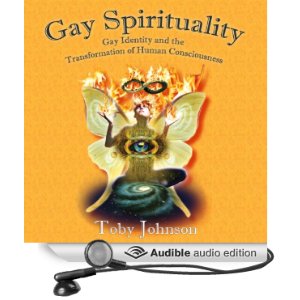
Gay Spirituality
Gay Identity and
the Transformation of
Human Consciousness
Gay
Spirituality is now
available as an audiobook, beautifully narrated by John Sipple. Click here
Charmed
Lives: Gay Spirit in Storytelling
edited by
Toby Johnson
& Steve Berman
Secret
Matter
Lammy Award Winner for Gay
Science Fiction
updated
Getting Life in
Perspective
A Fantastical Romance
Getting
Life in Perspective is available as an
audiobook narrated by Alex Beckham. Click
here
The Fourth Quill
originally published
as
PLAGUE

The Fourth Quill is
available
as an audiobook, narrated by Jimmie
Moreland. Click here
Two Spirits: A Story of
Life
with the Navajo
with Walter L. Williams
 Two
Spirits is available as an
audiobook narrated by Arthur Raymond. Click
here Two
Spirits is available as an
audiobook narrated by Arthur Raymond. Click
here
Finding
Your Own True Myth: What I Learned from Joseph
Campbell
The
Myth
of the
Great Secret III
In Search of God in the Sexual Underworld
The Myth of the Great
Secret: An Appreciation of Joseph Campbell.
This
was the second edition of this book.
Toby Johnson's
titles are
available in other ebook formats from Smashwords.
|
Waves of Gay
Liberation Activity
BONOBOS
Where did homosexuality
start?
That's an impossible question to answer. When were the first
people? Maybe it's even before people. Maybe homosexuality/"gay
consciousness," as we know it today, started back with the bonobos and
the champanzees. The bonobos--the cuter of the two, with better
hair--show little violence. They are very sexual, both heterosexually
and homosexually, and seem to solve problem by having sexplay instead
of by fighting, which is what chimpanzees do. Human beings are thought
to be descended from the chimps. But maybe there's a parallel between
mainstream, straight culture and chimpanzees and marginalized, gay
culture as the bonobos.
In the fanciful metaphor of
reincarnation mythology, I wonder if good
bonobos are reincarnated up the karmic ladder as sexually liberated gay
men or conversely if good gay men might be rewarded karmically by being
reincarnated as bonobos.
I want to present four
seminal ideas. These come from the following books:
ISHMAEL
by Daniel Quinn
BLOSSOM
OF BONE by Randy Conner
THE
POLITICS OF HOMOSEXUALITY by Toby Marotta
LEAVERS AND TAKERS
Human
beings appear to have lived on Earth for a couple of million years. The
dates have recently been pushed back even further. These people were
roughly called "Hunters and Gatherers." They lived in harmony with
nature and developed a stable ecological niche in which the population
kept balanced with the food sources. The fanciful, new age novel,
ISHMAEL by Daniel Quinn,
tells about a gorilla who has been taught to master human language and
so is able to speak for the non-human inhabitants of planet Earth.
The gorilla Ishmael calls the first humans “Leavers,” because they left
things they found them.
About
5-10 thousand years ago, a new idea developed among certain human
beings. This is called The Agrarian Revolution and is thought of as the
birth of humankind as we know it. Agriculture allowed food supplies to
increase to keep up with population. And population increased to use up
surplus food in an ever accelerating cycle. Ishmael calls these people
“Takers” because they took what they could get. Their basic presumption
is that Agrarians are above the exempted from the ecological order
because they discovered how to tip the balance their way and keep it
permanently tipped.
The
history of the civilized human race—at least in the West—is the history
of Takers converting or killing Leavers.
In less
than 10,000 years the conquest of Taker values has resulted in the
destruction and despoiling of the planet.
In the
last few decades, a new revolution has occurred—still looking for a
name and an identity. It is based on the achievement of perspective. As
no Takers ever before us, we can look back and see what’s happened.
Scientific objectivism, though a Taker artifact, has allowed us to
observe the patterns of history. We’re now beginning to question human
beings’ place in Earth’s ecology.
In the same way that there's a parallel between straight
and gay and chimps and bonobos, there's also a parallel between
straight and gay and Takers and Leavers.
Those early Leaver cultures are thought to have generated
shamanistic religions with cross-dressing/two-spirit tribval leaders.
It's in the later Taker cultures that male dominant doctrinal religions
develop.
BLOSSOM OF BONE
Randy
Conner has researched the role of “gender variant” people in
pre-Christian and non-Christian religions of the west. He’s found that
what we might loosely call the religions of the Leavers were dominated
by a homosexual priesthood.
Androgynous people can achieve a perspective above males and females.
They make good marriage counselors and conflict mediators. They
function as surrogate parents.
HEBREW CULTURE VS MEDITERRANEAN
The Greeks and Romans are thought to have relatively
accepting of sexual behavior, at least of males, including
homosexuality. The classical model tho' was quite unlike what
we
know as gay today, which emphasizes sameness and equality. Classical
homosexuality was between men of power and boys or slaves--a great
power imbalance.
Biblical Hebrew culture was not very accepting of
sexuality. The difference between the Mediterranean and the Hebrew is
the difference between lush countryside and barren desert. Rules about
behavior and about hygiene are much stricter in the desert. The risks
are greater and the struggle for hygiene more difficult. How do you
keep yourself clean when water is scarce?
All sex is inherently messy, homosexual sex even almost
necessarily "dirty," at least in the sense of violating the taboos of
toilet training. Ancient Jewish culture--and modern Middle-Eastern--was
patriarchal, male-dominant, and strict.
The Bible imposed rules for sexual behavior. One
such rule was certainly intended to condemn treating men as though they
were women. Since homosexual anal intercourse could be construed to do
that, it was included in these condemnations.
And though Jesus was apparently unconcerned about
sexual sins and may have been friends with known homosexuals (like the
Roman Centurion whose "boy" He healed and who-knows-who among the
Apostles--they were mostly all unmarried men at a time men were not
likely to be unmarried), Christianity continued the condemnation of any
and all sex outside strict married, reproductive intercourse. But
there's evidence homosexuality was not particularly noticed; some books
of instruction to confessors class homosexual behavior with spitting in
the street, i.e., a hygiene violation, but not very serious, and not
interpreted as unnatural, just uncleanly.
Following the Black Death and the Hundred Years War and
waves of plagues that devastated Europe, the Church--perhaps
intentionally--came up with a strategy for encouraging rebuilding and
repopulating: blame the plagues on non-reproductive sex. Then the
answer to their threat was more reproductive sex. And that repopulated
the continent. It was only at this time that the story of Sodom and
Gomorrah in the Bible was given the anti-homosexual spin. The idea that
homosexuality was the sin of Sodom comes less from the Bible than from
the Romanized Jewish historian Josephus who came up with the notion the
people of Sodom wanted to anally rape the angel visitors.
This was a useful strategy for social modification. It
saved Europe from despair and depopulation. But for gay people, it
would mean centuries of persecution.
GNOSTICISM
The great heresies in the West have driven
culture and
religion. We’re most interested in just one of them, but
it’s the most important and to some extent the basis of the others
anyway.
There's a gay theme that runs through these heresies. And
indeed homosexuality itself was considered heretical and heretics were
accused to sodomy. And homosexuality is tied into "countercultural"
notions of self-actualization and personal fulfillment. The upper
classes and intelligensia and artist classes could devote themselves to
self-fulfillment--and, for homosexuals, that would mean being able to
be homosexual.
Broadly
speaking, the great Western heresy that ties homosexuality into
mysticism and self-actualization into religion is GNOSTICISM, the
religious/mystical notion that things
aren’t really the way they appear, that the world is a kind of
illusion, and that mystical/initiated experience can give some
individuals a glimpse of the Truth. These individuals probably won’t be
able to communicate it to the masses. And so an elite develops. They
are “the illuminati” and really should control the world.
There’ve
been many waves of gnosticism. Manicheism was one of the most
important. It was Zoroastrian mysticism applied to the world view of
the near East around the time of Jesus. Basic to Manicheism was the
notion that matter was evil and dark. The soul was goodness and light.
Procreating offspring thus involved imprisoning spirit in matter.
Christianity is doctrinally prolife and so objected to this notion.
Manicheans practiced celibacy and contraception in order to achieve the
mystical experience of sexuality without the consequence of
procreation. The original condemnation of birth control came out of
this. They also believed that “the ritual eating of semen” helped
overcome the power of the darkness and released spirit from its prison
in matter.
Greek
gnosticism has survived as the Old Religions: witchcraft and nature
worship was one side of it. Mysticism, Hermeticism and, in
general, “conspiracy theory” and various kinds of spiritual
elitism were another side. The Counterculture of the 60s/70s was
another manifestation.
Crusaders traveling to the Holy Lands discovered
Levantine culture, and sexuality that Europe just didn't know about.
The "Treasure of the Knights Templar" might very well have been simply
homosexual love as preferential to the socially imposed heterosexual
marriage for procreation.
Gnosticism reappeared in France in the early middle ages as
Albigensianism or Catharism. This was centered in Languedoc in the area
of Provence on the South of France.
Languedoc
was possibly the real world basis for the myth of Camelot. It was the
San Francisco of its day: a countercultural, progressive,
multi-cultural center. Here the notion of romantic love was born.
Homosexuality is more like romance and arranged marriage.
The
Albigensian Crusade destroyed Langedoc.
The
counterculture of Provence generated non-canonical religious orders and
associations of friends. One such group were called Mattachines.
The
esoteric religion has thus long been fascinated with sex magic and
altered states of consciousness. Homosexuality is a natural part of sex
magic. And even today drugs have been a natural part of the gay
counterculture.
MONASTICISM AND MOLLY HOUSES
There
must have been a kind of homosexuality within medieval monasticism. The
monasteries were populated with men (and convents with women) who
weren't interested in marriage and family. The Church gave been an
identity and legitimacy they wouldn't have had otherwise. This is
where gay people of those days could find acceptance and loving
friendship, if perhaps only chastely (i.e. without intentional sex
acts).
Through most of European and British and then
American history, there's probably always been a relatively invisible
homosexual subculture of people who knew people who knew people…
In 18th and 19th century England, there were institutions
called Molly-houses that were effectively gay bars and bathhouses.
POETS AND PLAYWRIGHTS
Down
through history there have been homosexuals in prominent positions in
the arts and letters. Michelangelo and Leonardo da Vinci and class of
artists in Florence Rome were known to be homosexual. How many more
there were who were not known!
The great American poet, Walt Whitman (1819-1892), was
"closeted," but pretty transparent and guileless in his poetry and
expression of love for the beauty and touch of men.
Oscar Wilde (1854-1900) was part of a British homosexal
culture that included a whole class of men called "Dandies." And of
course everybody's favorite Dandy was the American farmboy hick Yankie
Doodle who playfully mimicked the Italian (macaroni) style of the
Dandies and stuck a feather in his cap.
Wilde was outrageous and got himself in trouble by suing
his boyfriend's father, the Marquis of Queensbury, for calling him
homosexual--when he obviously was. Tragically Wilde ended up in prison
and scared homosexuals into retreat.
But that same period saw Edward Carpenter (1844-1929)
explains same-sex love in the context of antrhopology and the study of
religion.
EUROPEAN SEXOLOGY
There’d
been a resurgence of interest in sex in Europe of the late 18th C. In America Walt
Whitman had just articulated a kind of homosexual nature mysticism—a
modern gnosticism. Post
World War I Germany saw a rise of a counterculture. The names of the
sexologists Krafft Ebbing, Havelock Ellis, Sigmund Freud, Magnus
Hirshfeld are familiar.
DER EIGENE, the first gay journal in the world, was published from 1896
to 1932 by Adolf Brand in Berlin. Though there were two prior issues to
this date, this was the first issue that was fully gay in its content.
Brand contributed many poems and articles himself. Other contributors
included Benedict Friedlander, Hanns Heinz, Erich Muhsam, Kurt Hiller,
Ernst Burchard, John Henry Mackay, Theodor Lessing, Klaus Mann and
Thomas Mann, as well as artists Wilhelm von Gloeden, Fidus and Sascha
Schneider. Like White Crane, the journal may have had an average of
around 1500 subscribers per issue during its run, but the exact numbers
are uncertain.
The title of the journal, Der Eigene (The Own), refers to the
classic anarchist work Der Einzige und sein Eigentum (1844) by Max
Stirner. Early issues reflected the philosophy of Stirner, as well as
other views on the politics of anarchism, but in the 1920s the journal
shifted to support the liberal democracy of the Weimar Republic and
more specifically the Social Democratic Party. Der Eigene
interwove cultural, artistic, and political material, including lyric
poetry, prose, political manifesto and nude photography. A winning
combination in our opinion.
Magnus Hirschfeld (14 May 1868 – 14 May 1935) was a German Jewish
physician and sexologist educated primarily in Germany; he based his
practice in Berlin-Charlottenburg. An outspoken advocate for sexual
minorities, Hirschfeld founded the Scientific Humanitarian Committee.
Historian Dustin Goltz characterized this group as having carried out
"the first advocacy for homosexual and transgender rights".
In 1921 Hirschfeld organised the First Congress for Sexual Reform,
which led to the formation of the World League for Sexual Reform.
Congresses were held in Copenhagen (1928), London (1929), Vienna
(1930), and Brno (1932).
Conrad Veidt and Hirschfeld as Paul Körner and the Doctor in Different
from the Others
Hirschfeld was both quoted and caricatured in the press as a vociferous
expert on sexual matters; during his 1931 tour of the United States,
the Hearst newspaper chain dubbed him "the Einstein of Sex". He
identified as a campaigner and a scientist, investigating and
cataloging many varieties of sexuality, not just homosexuality. He
developed a system which categorised 64 possible types of sexual
intermediary ranging from masculine heterosexual male to feminine
homosexual male, including those he described under the term
transvestite (Ger. Transvestit), which he coined in 1910 to
describe people who in the 21st century might be referred to as
transgender or transsexual.
When the Nazis took power, they attacked Hirschfeld's Institute on 6
May 1933, and burned many of its books as well as its archives, the
Institut für Sexualwissenschaft.
By the time of the book burning, Hirschfeld had long since left Germany
for a speaking tour that took him around the world; he never returned
to Germany. In March 1932 he stopped briefly in Athens, spent several
weeks in Vienna and then settled in Zurich, Switzerland in August 1932.
CHICAGO'S SOCIETY FOR HUMAN RIGHTS
The first organization for homosexual rights in America
was established in Chicago
in 1924. Henry Gerber founded the "Society for Human Rights," modeling
his organization on the homosexual rights movement in Germany. The
"Society for Human Rights" focused on educating the heterosexual
community about the nature of homosexuality and reforming the laws that
criminalized homosexuality. However, after only a few months of
meetings and the publication of two issues of the society's paper
"Friendship and Freedom," Chicago authorities shut down Gerber's
organization in 1924 because of the anti-homosexual sentiment of the
time.
Although Gerber's "Society for Human Rights" was short-lived, lesbians
and gay men were highly visible in 1920s Chicago, particularly in the
bohemian world of Towertown, so-called because of its proximity to the
Water Tower. Chicago, like many cities of the 1920s, had its Bohemian
neighborhood where artists, poets, and lesbians and gay men lived and
congregated. The visibility of lesbians and gay men in Towertown marks
an important historical moment when there was an openness and
acceptance of lesbians and gay men in certain artistic and bohemian
worlds.
CRIMINALS AND PSYCHOPATHS
Homosexual activity was against the law in most of the
world. Where it hadn't been before, the Brtish Empire inspired rigid
morality laws than punished homosexuals severely. This is in a long
tradition of poor gay men being caught and hanged or burned alive or
shot or drowned in a variety of horrible ways. Imprisonment was
relatively benign.
The World Wars in the 20th Century had a tremendous effect in exposing
the common people to a bigger world. "How can you keep them down on the
farm after they've seen Paree?" Not unlike the Crusaders in the 12th
Century who were exposed to the Levant, the Americans who went to
Europe discovered more liberal ideas about sexuality AND the
homosexuals among them saw each other in the Army and the Navy and
around the world. It was eye-opening.
A little bit of homosexuality was accepted as part of boys being boys
when there aren't any girls around. The Navy and merchant marine has a
history of such carrying-on.
The US military accepted a certin amount. It wasn't all that forbidden.
At the time of the World Wars, psychiatry was being developed as a
branch of medicine. Psychiatrists were called in to treat
"Shell-shock," as Post-traumatic Shock Syndrone was called in those
days. But military psychiatrists didn't have a lot to do. (As M*A*S*H
and Joseph Heller's Catch-22
have dramatized, it isn't crazy to
be disturbed by war.) Towards the middle of World War II, military
psychiatrists came up with a job for themselves--finding and curing, or
punitively discharging, homosexuals in the ranks. And "homosexuality"
became thought of as a mental illness. While this "more enlightened"
shift probably saved some peopel from being treated as criminals going
to prison for being gay, it meant they and others would endure
electroshock, aversion therapy and other forms of coercive treatment
and waste enormous amounts of money being analyzed insearch of a "cure"
for being who they were.
An irony of history is that male homosexuals who were mustered out of
the Army and Navy in the Pacific Theater were mostly discharged in San
Francisco. They had dishonorable discharges, which were printed on blue
paper, and the gay people had a big red H stamped on the discharge.
These men, and women, couldn't go home. So they stayed in California
and especially the Bay Area.
Inadvertently the US military made San Francisco the gay mecca.
POLITICS OF HOMOSEXUALITY
I worked
with Toby Marotta
on the revision of his PHD dissertation for Harvard. It set out to
explain in political/sociological terms how and why the gay political
movement happened and why its organizations have always been
short-lived.
He
created a model that explains the variety of axes along which gay
movement activity has happened. The model indeed explains why
organizations rise and collapse, and more importantly, explains why
there is so much strife.
The Model:
Up to the
early 70s there were three waves. We can now identify two—and maybe
three—more.
THE HOMOPHILE MOVEMENT
Started
by Harry Hay in California, this grew out of 50s idealistic Communism.
Recall that following WW2, existentialist, bohemian, counterculturists
adopted Marxist idealism. The counterculture always mixes up populism
and egalitarianism with its own elitism. (The French Revolution is the
classic example)
Following
WW2, a lot of homosexuals were dishonorably discharged and mustered out
of the military in California and New York—the coasts.
In the
summer of 1948, Hay was at a party where an idea was brought up to form
a group called Bachelors for Wallace to support the Progressive
candidate Henry Wallace.
That group never formed. But
a couple of years later while he was at the Southern California Labor
school where he taught music, he came up with the idea of the
“International Bachelors Fraternal Order for Peace and Social Dignity”
or Bachelors Anonymous. Soon after the Korean War broke out, the
political activists in California, calling themselves communist, put
out a petition. Harry Hay took the petition to the beaches of Santa
Monica and Venice. Hay saw that homosexuals could organize politically.
Soon the Mattachine Society was formed.
In its
creation, the Movement harked back to gnosticism.
Franklin
Kameny was a Harvard PhD astronomer who got a job with the Army Map
Service. When they found he was gay, they fired him. He appealed to the
Courts, getting all the way to the Supreme Court (which, however,
refused to hear the case). Politicized by his experience he helped form
a Washington branch.
These two
men represent two different approaches. Hay was a communist militant
calling for revolution. Kameny was a moderate reformer who wanted
redress through the system. Kameny was in fact a militant compared to
the moderates who followed him and formed the New York Mattachine.
The
homophile movement downplayed sexuality, thus its name. They believed
that “prejudice, stereotyping, and discrimination were the source of
the homosexual’s problems and that education, policy reform, and help
for individual homosexuals would bring about the recognition of basic
similarity, equality of treatment, and integration that were tantamount
to social progress.”
The
McCarthy hearings scared moderates away from Harry Hay’s communist
idealism (while inspiring Hay to make his organization a secret society
of cells that did not know who belonged to other cells).
The
homophile movement ended up organizing lectures by psychiatrists and
seeking law reform on the grounds that homosexuals were hapless victims
who didn’t deserve any more oppression. This retrechment was based in
organizational maintenance concerns (they didn’t want to be outlaws),
but made it difficult for the organization to attract members, because
its basic argument (coming out of the civil rights movement) was that
sexual orientation didn’t matter very much.
It was
hard to get members to risk their lives and livelihoods for something
that didn’t matter.
The
Daughters of Bilitis was an organization for women formed first in San
Francisco by Del Martin and Phyllis Lyon who had formed a social club,
but having heard of the LA Mattachine and ONE Magazine, politicized the
social group to become DOB.
The axis
we want to look at here is Moderate vs Militant.
In S.F. and L.A. and elsewhere around the country, mostly unknown,
there were protests against police oppression of gay people. like
the Black Cat Bar Raid (1948) and the Compton’s
Cafeteria riot (August 1966), both in S.F. that weren't directly
associated with any
homophile organizations.
In 1973, partly in response to Alfred Kinsey's discoveries
about sexual behavior, sympathetic doctors, like Judd Marmor, and
openly gay researchers, like Evelyn Hooker, successfully lobbied the
American Psychiatric Association to remove homosexuality from the list
of mental disorders.
GAY LIBERATION
Following
the so-called Stonewall Riots in New York City in late June 1969,
hippies and anti-war politicized students and
counterculturalists formed GLF, taking the name from the National
Liberation Front of Viet Nam.
GLF soon
fell apart because it was too disorganized. Gay Activists Alliance
(created by Arthur Evans) formed to replace it.
GAA
devised the action of “political zaps.” Chaining themselves to the
mayor’s desk; clasping his hand in a crowd and not letting go;
disrupting the opera. “Mr. Mayor (Lindsay), what are you going to do
about the problems of homosexuals,” they’d ask.
GAA
created The Firehouse, the archetypal gay community center, where they
held dances and meetings to educate gay people.
A major
change in strategy from the homophile movement to educate the public
was to GLF/GAA’s strategy to educate gay people.
Gay
Liberation rose out of the counterculture and politicized anti-war
movement.
Marotta
identifies two axes here.
1)
Political-economic vs. cultural concerns (i.e. leftist politicos vs.
flower children)
2)
Radicals vs. reformers
Political-economic radicals/revolutionaries were inspired by S.D.S and
student protest. In fact, they saw homosexuals as simply another
minority to mobilize in the revolution and overthrow of capitalism.
Cultural
radicals wanted to create a whole new gay culture, separate but equal
(actually, of course, superior). The Firehouse was their creation,
along with gay theater, arts, etc. Gay bookstores come under this
rubric.
Political
reformers wanted to infiltrate the existing system to change laws to
make them fairer. They were not trying to overthrow capitalism and were
always frustrated and annoyed by all the radicals who didn’t seem to
know how to get anything accomplished—and didn’t seem to care.
Cultural
reformers wanted to change the way gay people are portrayed in the
culture. GLLAD is a manifestation of this; domestic partnership
legislation; MCC.
Also gay capitalism which
co-opted the movement in the 1970s and carried gay culture into the
affluent gay ghetto, but diluted its political/radical punch.
LESBIAN FEMINISM
Marotta’s
third wave is women’s participation.
Early GLF
was made up of both men and women. They had adopted GAY as their term.
But what the women in the movement discovered was that the men (tho’
homosexual) were still men. AND that the word gay as an all-inclusive
term made them and their cause invisible.
Lesbians
were torn between being gay liberationists OR feminists. And still are.
The
mainstream women’s movement, based on the civil rights movement for
equality, not social upheaval, didn’t know what to do with lesbians.
They were an embarrassment and a liability for organizational
maintenance.
Lesbian
separatism was one reaction.
The axis
here is biological identity vs. behavior.
This is
similar to the issue involved currently with the gays in the military
question
Lesbian
feminism in some ways has had the greatest effect on how we all think
about and discuss these issues. That’s because feminism analysized how
words and word usage affects people’s thinking (hence the effort at
inclusive language). But lesbians observed their issues needed to
not be inclusively covered. We now all use the expressions Lesbian and
Gay.
Marotta’s analysis ended
here with what he called The Explosion of Things Gay, i.e. the
inclusion of gay people in everybody’s understanding of what human
beings are like.
The fourth wave started a
couple of years later. It rose out of efforts of cultural reformers to
get the health and medical needs of homosexuals identified. Health
activists were radicals or reformers.
GAY MEN’S HEALTH CRISIS
The whole
thrust of gay organizing changed with the appearance of AIDS. The
disease politicized a segment of people who had not paid much attention
to the political side of gay liberation.
This also
forced a reassessment of the norms of sexual liberation and of the
meaning and significance of death and mortality.
It’s
clear there are reformist groups: ASA, AmFAR, etc
And
radical, non-conformist groups: HIV Wellness Project, Attitudinal
Healing
Also
moderate and militant groups, to wit, GMHC and ACT UP
QUEER AMALGAM
The
nihilistic, angry cultural reaction to AIDS has given rise to a
non-medical reaction to the health crisis. This wave set out again to
select and all-inclusive word: Queer.
Its
countercultural styles are those of the late 80s punks and skin heads,
not the 60s hippies and flower children.
By the 2000s,
"Queer"
had come to develop a newer meaning. It has come to be seen as an
umbrella term for sexual diversity than transcends political-cultural
identification. "Queer" now includes a generational cohort that
experiences sexual attraction and sexual identification as fluid and
changeable and inclusive.
A SIXTH WAVE
Or maybe
this is what has been at the heart of all his activity all along: the
collapse and overthrowal of male-dominated, patriarchal mythologies and
values.
I would
like to call this emerging theme Gay Eco-Spirituality. This takes
us back to Ishmael and the Takers and the Leavers.
I am
arguing that the perspective given to gay people by our not fitting in
and not identifying as either male or female gives us CRITICAL
DISTANCE. We can see what’s happening.
Taker
values are all founded on reproduction of offspring and cultivation of
the earth to produce harvest. What you are is what you produce and your
value to society lies in production of desired and needed goods
(including children).
New
Leaver values are founded on understanding of dynamic systems and
ecological balances. Gaia, not Jehovah, is the god. And we are created
as instruments of her guidance of planetary evolution.
Author note: The
Sixth Wave I
envisioned in 1990 when I wrote this article (and when I was reading
Daniel Quinn's and Morris Berman's books) never quite materialized.
Though it woukld be included in the larger notion of "Gay Spirituality"
which I came to champion.
SAME-SEX MARRIAGE
What DID happen, starting in the 90s and succeeding in 2015 with the
Supreme Court was the recognition of Same-Sex Marriage. This is an
example of what Marotta would have called Political-economic Reformism.
To the larger world, gay marriage was radical, but within liberated gay
life getting your relationship approved by the government seems
anything but. Recognition of gay relationships and acknowledgement of
our issues and of our individual rights was something we always
believed the Supreme Court would have to approve of once these issues
got to its docket. But they weren't getting there. And the push for
marriage forced our issues into public view--and in a fairly
sympathetic way.
TRANS* RIGHTS
Trans*
identity is an
artifact of medicine and surgical prowess, but it responds to an
important segment of gay people's consciousness. The asterisk in Trans*
is ussed like the wildcard in a computer search. It acknowledges that
there are a variety of gender identities and roles and appearances that
one can transition into.
Drag and cross-dressing have always been parts of gay life. During the
heyday of gay liberation, cross-dressing--especially "genderfuck
cross-dressing"--was a parody of how traditional society treated women.
And the idea of surgical reassignment or surgical gender confirmation
was new--and the medical implications only partly understood.
The drag queens at The Stonewall weren't really "trans*" because that
label didn't exist yet. But some of the people who were drag queens
back then would later come to think of themselves and their gender
experiences as trans*.
It's a curious question how trans* fits into gay/queer. Trans* is tied
into the heterosexual duality. The whole idea of transforming from one
side to the other emphasizes the two sides. But surely all
sexually-diverse people must support one another in achieving the goals
of self-actualization and psychological fulfillment.
|