|
Contact Us Table of Contents Search Site Google listing of all pages on this website Site Map Toby Johnson's Facebook page Toby Johnson's YouTube channel Toby Johnson on Wikipedia Toby Johnson Amazon Author Page  Secure site at https://tobyjohnson.com  Also on this website: As an Amazon Associate
I earn from qualifying purchases. Toby Johnson's books: Toby's books are available as ebooks from smashwords.com, the Apple iBookstore, etc. FINDING
YOUR OWN TRUE MYTH: What I Learned
from Joseph Campbell: The
Myth
of the
Great Secret
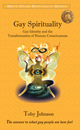
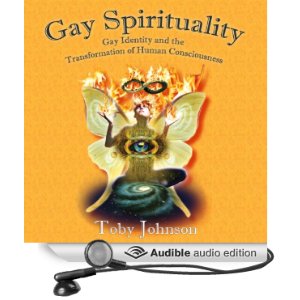
III GAY SPIRITUALITY: The Role of Gay Identity in the Transformation of Human Consciousness
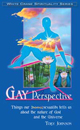
GAY PERSPECTIVE: Things Our Homosexuality Tells Us about the Nature of God and the Universe
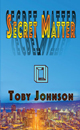
SECRET MATTER, a sci-fi novel with wonderful "aliens" with an Afterword by Mark Jordan
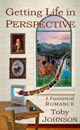
GETTING
LIFE IN PERSPECTIVE:
A
Fantastical Gay Romance set in two different time periods
THE FOURTH QUILL, a novel about attitudinal healing and the problem of evil 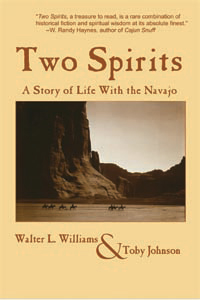 TWO SPIRITS: A Story of Life with the Navajo, a collaboration with Walter L. Williams  CHARMED LIVES: Spinning Straw into Gold: GaySpirit in Storytelling, a collaboration with Steve Berman and some 30 other writers
THE MYTH OF THE GREAT SECRET: An Appreciation of Joseph Campbell
IN SEARCH OF GOD IN THE SEXUAL UNDERWORLD: A Mystical Journey
Books on Gay Spirituality: White Crane Gay Spirituality Series
Articles and Excerpts:
Review of Samuel Avery's The Dimensional Structure of Consciousness Funny Coincidence: "Aliens Settle in San Francisco" About Liberty Books, the Lesbian/Gay Bookstore for Austin, 1986-1996 The Simple Answer to the Gay Marriage Debate A Bifurcation of Gay Spirituality Why gay people should NOT Marry The Scriptural Basis for Same Sex Marriage
Gay ConsciousnessQ&A about Jungian ideas in gay consciousness What Jesus said about Gay Rights Common Experiences Unique to Gay Men Is there a "uniquely gay perspective"? Interview on the Nature of Homosexuality What the Bible Says about Homosexuality Mesosexual Ideal for Straight Men Waves of Gay Liberation Activity Wouldn’t You Like to Be Uranian? The Reincarnation of Edward Carpenter Why Gay Spirituality: Spirituality as Artistic Medium Easton Mountain Retreat Center Andrew Harvey & Spiritual Activism The Mysticism of Andrew Harvey
Enlightenment
Joseph Campbell's description of Avalokiteshvara You're Not A WaveJoseph Campbell Talks about Aging What is Enlightenment? What is reincarnation? How many lifetimes in an ego? Emptiness & Religious Ideas Experiencing experiencing experiencing Going into the Light Meditations for a Funeral Meditation Practice The way to get to heaven Buddha's father was right What Anatman means Advice to Travelers to India & Nepal The Danda Nata & goddess Kalika Nate Berkus is a bodhisattva John Boswell was Immanuel Kant Cutting edge realization The Myth of the Wanderer Change: Source of Suffering & of Bliss World Navel What the Vows Really Mean Manifesting from the Subtle Realms The Three-layer Cake & the Multiverse The est Training and Personal Intention Effective Dreaming in Ursula LeGuin's The Lathe of Heaven Gay
Spirituality
|
 Art
That Dares: Art
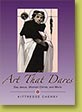
That Dares: Gay Jesus, Woman Christ, and More By Kittredge Cherry AndroGyne Press, pb, 96 pages, $38.95 Kitt Cherry’s newest creation is wonderful, mind-blowing, and beautiful. White Crane readers will recognize her name from previous mentions of her equally mind-blowing novel, Jesus in Love, which presents an autobiography (i.e., told in the first-person) of Jesus Christ as a modern psychologically sophisticated and sexually aware ego-person. Cherry is a lesbian former MCC minister, now in semi-retirement, and author of a book for young people on coming out and a guide to lesbian and gay worship and ceremonies. She is also an art historian. And it is in this last identity that she has collected paintings, photographs and graphics that depict what might be called “alternative” versions of Christian imagery. This book is effectively a “catalogue” of an exhibition she mounted at the JHS Gallery in Taos, New Mexico, as part of the National Festival of Progressive Spiritual Art, in May 2007. It includes beautifully reproduced images of some eleven artists, along with in-depth articles about each artist and explanations of the themes in the selected examples. The subtitle reveals just why “explanations” are in order: “Gay Jesus, Woman Christ, and More.” The introduction contains an account of Cherry’s motivation in searching out this truly “visionary” style of artistic expression and an intelligent discussion of the meaning of the oh-so-religious-sounding term “blasphemy.” You can imagine she’s had that epithet hurled at her! Her “blasphemy” is so honest, so respectful, visionary, and inspiring that it becomes a kind of new religion, a Christianity not stuck in literal old stories, but alive with imagery meaningful to us today—not the Jesus of history 2000 years old, but the mystical Jesus of the present NOW, alive in human beings today, suffering and resurrecting through the struggles of modern life and of sexual and gender liberation. Cherry explains that blasphemy refers to speech intended to transgress or express contempt for central religious beliefs, in that sense, the idea is to protect the status quo religion and culture. But in effect, blasphemy is what wakes people up and forces them to rethink their unquestioned cultural beliefs and myths. In that sense, blasphemy is the truly spiritual tool for transforming consciousness. Jesus Christ, after all, was put to death for blasphemy. I suppose not all blasphemous speech or art wakes people to the true meaning of religion, but the very fact that a believer would feel so threatened that he or she would hurl accusations at another of this sin ought to tell them something about their own precarious hold on truth. It’s like the Jungian notion of “the shadow” that what upsets you the most—and the most compulsively in other people—is a reflection of traits in yourself you are trying to protect yourself from recognizing and admitting. Being upset by somebody else’s beliefs one disagrees with is some sort of sign of one’s own skepticism. And so the more the beliefs seem meaningless, the more fiercely they have to defended. "From Michelangelo to Mantegna, Piero Della Francesca to Paul Gauguin, images of Jesus Christ have offended, delighted, outraged, and inspired the devout. For each controversial image, the sacred and profane become intermixed in new ways, challenging viewers to rethink their own imaginary history of religion, spirituality, and sexuality. Kittredge Cherry has performed a great service for our contemporary age, reminding us again what we hold sacred and profane, and how our old categories might be reimagined." —S. Brent Plate, Associate Professor of Religion and the Visual Arts, Texas Christian University, and author of Blasphemy: Art that Offends The sinfulness of blasphemy is based on the first of the Ten Commandments: Thou shalt make no graven images. Jesus, of course, transformed those commandments, reducing them to two: love God and love your neighbor. And as Christianity moved into Europe in its early missionary days, it dropped the objection to graphic images altogether. That was a desert thing! Nomads--Jews and later Muslims--objected to depictions of God. Greek, Roman and European cultures exulted in creating representations of God. Indeed, during the Middle Ages, the stained glass windows of the great cathedrals were the catechisms by which the religious stories were portrayed and promulgated. The imagery made the stories more real--and memorable--and provided insight into their meaning. That’s exactly what the image, say, of a female Christ--like that of acrylic artist Jill Ansell--does: causes the viewer to think through the contradiction and to understand “Christ” as a mystical reality which necessarily includes both male and female since humankind includes both male and female. The image of a woman rising from the tomb triumphant reminds us vividly that the Christian message about resurrection includes the feminine principle as well as the masculine. Depictions of Jesus are often “homoerotic” in that he is prototypically shown near naked and suffering the afflictions of the flesh. Oil painter F. Douglas Blanchard portrays Jesus as a modern gay man in modern clothing being brutalized by police and by fag-baiting protestors. The disturbing, but ultimately glorious, series of twenty-four painting, of which five are included in the book, force the viewer to consider that anti-gay violence in the name of religion is an exact parallel to the violence done against Jesus and which Christians believe was salvific for us all. With paint on plexiglass Alex Donis produced faux stainedglass windows showing improbable combinations in an intimate kiss--John Kennedy and Fidel Castro, the Pope and Gandhi, Adolf Hitler and a Holocaust survivor--to call into question conventional dualistic categories. Reproduced in the book are the kisses of Jesus and the Hindu god Rama and Mary Magdalene and the Virgen de Guadalupe. Several of Donis’ creations were destroyed by vandals in protest against the exhibit in San Francisco in 1997. Perhaps the most familiar artwork in the book is that of Franciscan brother Robert Lentz. His modern day Greek Orthodox-styled icons--of both traditional holy figures and modern political and cultural characters--have been distributed through progressive and GLBTI bookstores and card shops for years. The icon of Harvey Milk, Martyr is a national gay treasure. (Since Lentz returned to the Order later in his life, he’s been forbidden for marketing the more controversial of his icons, but they are still available through his previous distributor.) And the icons of Jesus as AIDS sufferer by openly gay ex-Jesuit priest William Hart McNichols will also be familiar. They’ve appeared in the gay press. That’s to point out only five of the eleven artists. All the images in Art That Dares are equally striking and transforming of ideas about the meaning of religious iconography. The book is liable to be dismissed and deprecated by the Religious Right. Some of the people who really need to see this material will never lay eyes on it. But now it’s out there. Kitt Cherry’s work has already gotten notice and condemnation that ironically has brought needed attention. This is a lovely book. And a very neat idea! I urge readers to seek it out. Selections from Art That Dares are highlighted on Cherry’s internet page www.jesusinlove.org. Link to Amazon.com Art That Dares: Gay Jesus, Woman Christ, and More  |
Toby Johnson, PhD is author of nine books: three non-fiction books that apply the wisdom of his teacher and "wise old man," Joseph Campbell to modern-day social and religious problems, four gay genre novels that dramatize spiritual issues at the heart of gay identity, and two books on gay men's spiritualities and the mystical experience of homosexuality and editor of a collection of "myths" of gay men's consciousness.
Johnson's book
GAY
SPIRITUALITY: The Role of Gay Identity in the Transformation of
Human Consciousness won a Lambda Literary Award in 2000.





 Two
Spirits is available as an
audiobook narrated by Arthur Raymond.
Two
Spirits is available as an
audiobook narrated by Arthur Raymond.