Contact Us
Table of Contents
Search Site
Google listing of all pages on this website
Site Map
Toby
Johnson's Facebook page
Toby
Johnson's YouTube channel
Toby Johnson on Wikipedia
Toby
Johnson Amazon Author Page

Secure site at
https://tobyjohnson.com
Also on this
website:
As an Amazon Associate
I earn from qualifying purchases.
Toby
Johnson's books:
Toby's books are available as ebooks from
smashwords.com, the Apple iBookstore, etc.
FINDING
YOUR OWN TRUE MYTH: What I Learned
from Joseph Campbell: The
Myth
of the
Great Secret
III
GAY
SPIRITUALITY:
The Role of Gay Identity in the Transformation of Human Consciousness

GAY PERSPECTIVE:
Things Our Homosexuality Tells Us about the Nature of God and the
Universe

SECRET MATTER, a sci-fi novel with
wonderful "aliens" with an
Afterword by Mark Jordan

GETTING
LIFE IN PERSPECTIVE:
A
Fantastical Gay Romance set in two different time periods

THE FOURTH QUILL, a
novel about attitudinal healing and the problem of evil

TWO SPIRITS: A Story of Life with
the
Navajo, a collaboration with Walter L. Williams

CHARMED
LIVES: Spinning Straw into
Gold: GaySpirit in Storytelling, a collaboration with
Steve Berman and some 30 other writers
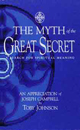
THE MYTH OF THE GREAT
SECRET:
An
Appreciation of Joseph Campbell
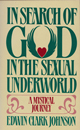
IN SEARCH OF GOD IN THE
SEXUAL UNDERWORLD: A Mystical Journey
Unpublished manuscripts
About ordering
Books on
Gay Spirituality:
White
Crane Gay Spirituality Series

Articles
and Excerpts:
Review of Samuel
Avery's The
Dimensional Structure of Consciousness
Funny
Coincidence: "Aliens Settle in San Francisco"
About Liberty Books, the
Lesbian/Gay Bookstore for Austin, 1986-1996
The Simple Answer to the Gay Marriage Debate
A
Bifurcation of Gay Spirituality
Why gay people should NOT Marry
The Scriptural Basis for
Same Sex Marriage
Toby and Kip Get Married
Wedding Cake Liberation
Gay Marriage in Texas
What's ironic
Shame on the American People
The "highest form of love"
Gay Consciousness
Why homosexuality is a sin
The cause of homosexuality
The
origins of homophobia
Q&A
about Jungian ideas in gay consciousness
What
is homosexuality?
What
is Gay Spirituality?
My three
messages
What
Jesus said about Gay
Rights
Queering
religion
Common
Experiences Unique to Gay
Men
Is there a "uniquely gay
perspective"?
The
purpose of homosexuality
Interview on the Nature of
Homosexuality
What the Bible Says about
Homosexuality
Mesosexual
Ideal for Straight Men
Varieties
of Gay Spirituality
Waves
of Gay Liberation Activity
The Gay Succession
Wouldn’t You Like to Be Uranian?
The Reincarnation of
Edward Carpenter
Why Gay Spirituality: Spirituality
as Artistic Medium
Easton Mountain Retreat Center
Andrew Harvey &
Spiritual Activism
The Mysticism of
Andrew Harvey
The
upsidedown book on MSNBC
Enlightenment
"It's
Always About You"
The myth of the Bodhisattva
Avalokitesvara
Joseph
Campbell's description of
Avalokiteshvara
You're
Not A Wave
Joseph Campbell Talks
about Aging
What is Enlightenment?
What is reincarnation?
How many lifetimes in an
ego?
Emptiness & Religious Ideas
Experiencing experiencing experiencing
Going into the Light
Meditations for a Funeral
Meditation Practice
The way to get to heaven
Buddha's father was right
What Anatman means
Advice to Travelers to India
& Nepal
The Danda Nata
& goddess Kalika
Nate Berkus is a bodhisattva
John Boswell was Immanuel Kant
Cutting
edge realization
The Myth of the
Wanderer
Change: Source of
Suffering & of Bliss
World Navel
What the Vows Really
Mean
Manifesting
from the Subtle Realms
The Three-layer
Cake
& the Multiverse
The
est Training and Personal Intention
Effective
Dreaming in Ursula LeGuin's The Lathe of Heaven
Gay
Spirituality
Curious
Bodies
What
Toby Johnson Believes
The
Joseph Campbell Connection
The
Mann Ranch (& Rich Gabrielson)
Campbell
& The Pre/Trans Fallacy
The
Two Loves
The
Nature of Religion
What's true about
Religion
Being
Gay is a Blessing
Drawing Long Straws
Freedom
of Religion
The
Gay Agenda
Gay
Saintliness
Gay
Spiritual Functions
The subtle workings of the spirit
in gay men's lives.
The Sinfulness of
Homosexuality
Proposal
for a study of gay nondualism
Priestly Sexuality
Having a Church to
Leave
Harold Cole on Beauty
Marian Doctrines:
Immaculate Conception & Assumption
Not lashed to the
prayer-post
Monastic or Chaste
Homosexuality
Is It Time to Grow
Up? Confronting
the Aging Process
Notes on Licking
(July, 1984)
Redeem Orlando
Gay Consciousness changing
the
world by Shokti LoveStar
Alexander Renault
interviews Toby
Johnson
Mystical Vision
"The
Evolution of Gay Identity"
"St. John of the
Cross & the Dark Night of
the Soul."
Avalokiteshvara
at the Baths
Eckhart's Eye
Let Me
Tell You a Secret
Religious
Articulations of the
Secret
The
Collective Unconscious
Driving as
Spiritual Practice
Meditation
Historicity
as Myth
Pilgrimage
No
Stealing
Next
Step in Evolution
The
New Myth
The Moulting of the Holy Ghost
Gaia
is a Bodhisattva
The Hero's
Journey
The
Hero's Journey as archetype -- GSV 2016
The Gay Hero Journey
(shortened)
You're
On Your Own
Superheroes
Seeing
Differently
Teenage
Prostitution and the Nature of Evil
Allah
Hu: "God is present here"
Adam
and Steve
The Life is
in the Blood
Gay retirement and the "freelance
monastery"
Seeing with
Different Eyes
Facing
the Edge: AIDS as an occasion for spiritual wisdom
What
are you looking for in a gay science fiction novel?
The Vision
The
mystical experience at the Servites' Castle in Riverside
A Most Remarkable
Synchronicity in
Riverside
The
Great Dance according to C.S.Lewis
The Techniques Of The
World Saviors
Part 1: Brer Rabbit and the
Tar-Baby
Part 2: The
Bodhisattva Avalokiteshvara
Part 3: Jesus
and the Resurrection
Part 4: A
Course in Miracles
The
Secret of the Clear Light
Understanding
the Clear Light
Mobius
Strip
Finding
Your
Tiger Face
How Gay Souls Get Reincarnated
Joseph
Campbell, the Hero's Journey, and the modern Gay Hero-- a five part
presentation on YouTube
About Alien Abduction
In
honor of Sir Arthur C Clarke
Karellen was a homosexual
The
D.A.F.O.D.I.L. Alliance
Intersections
with the movie When We Rise
More
about Gay Mental Health
Psych
Tech Training
Toby
at the California Institute
The
Rainbow Flag
Ideas for gay
mythic stories
People
Kip and Toby,
Activists
Toby's
friend and nicknamesake Toby Marotta.
Harry
Hay, Founder of the gay movement
About Hay and The New Myth
About
Karl
Heinrich Ulrichs, the first
man to really "come out"
About Michael Talbot, gay mystic
About Fr. Bernard Lynch
About Richard Baltzell
About Guy Mannheimer
About David Weyrauch
About
Dennis Paddie
About Ask the Fire
About
Arthur Evans
About
Christopher Larkin
About Mark Thompson
About Sterling Houston
About Michael Stevens
The Alamo Business
Council
Our friend Tom Nash
Second March on
Washington
The
Gay
Spirituality Summit in May 2004 and the "Statement
of Spirituality"
Book
Reviews
Be Done on Earth by Howard
E. Cook
Pay Me What I'm Worth by
Souldancer
The Way Out by Christopher
L Nutter
The Gay Disciple by John Henson
Art That Dares by Kittredge Cherry
Coming Out, Coming Home by Kennth
A. Burr
Extinguishing
the Light by B. Alan Bourgeois
Over Coffee: A conversation
For Gay
Partnership & Conservative Faith by D.a. Thompson
Dark Knowledge
by
Kenneth Low
Janet Planet by
Eleanor
Lerman
The
Kairos by Paul E. Hartman
Wrestling
with Jesus by D.K.Maylor
Kali Rising by Rudolph
Ballentine
The
Missing Myth by Gilles Herrada
The
Secret of the Second Coming by Howard E. Cook
The Scar Letters: A
Novel
by Richard Alther
The
Future is Queer by Labonte & Schimel
Missing Mary
by Charlene Spretnak
Gay
Spirituality 101 by Joe Perez
Cut Hand: A
Nineteeth Century Love Story on the American Frontier by Mark Wildyr
Radiomen
by Eleanor Lerman
Nights
at
Rizzoli by Felice Picano
The Key
to Unlocking the Closet Door by Chelsea Griffo
The Door
of the Heart by Diana Finfrock Farrar
Occam’s
Razor by David Duncan
Grace
and
Demion by Mel White
Gay Men and The New Way Forward by Raymond L.
Rigoglioso
The
Dimensional Stucture of Consciousness by Samuel Avery
The
Manly Pursuit of Desire and Love by Perry Brass
Love
Together: Longtime Male Couples on Healthy Intimacy and Communication
by Tim Clausen
War
Between Materialism and Spiritual by Jean-Michel Bitar
The
Serpent's Gift: Gnostic Reflections on the Study of Religion by
Jeffrey J. Kripal
Esalen:
America and the Religion of No Religion by Jeffrey J. Kripal
The
Invitation to Love by
Darren Pierre
Brain,
Consciousness, and God: A Lonerganian Integration by Daniel A
Helminiak
A
Walk with Four Spiritual Guides by Andrew Harvey
Can Christians Be Saved? by Stephenson & Rhodes
The
Lost Secrets of the Ancient Mystery Schools by Stephenson &
Rhodes
Keys to
Spiritual
Being: Energy Meditation and Synchronization Exercises by Adrian
Ravarour
In
Walt We
Trust by John Marsh
Solomon's
Tantric Song by Rollan McCleary
A Special Illumination by Rollan McCleary
Aelred's
Sin
by Lawrence Scott
Fruit
Basket
by Payam Ghassemlou
Internal
Landscapes by John Ollom
Princes
& Pumpkins by David Hatfield Sparks
Yes by Brad
Boney
Blood of the Goddess by William Schindler
Roads of Excess,
Palaces of
Wisdom by Jeffrey Kripal
Evolving
Dharma by Jay Michaelson
Jesus
in Salome's Lot by Brett W. Gillette
The Man Who Loved Birds by Fenton Johnson
The
Vatican Murders by Lucien Gregoire
"Sex Camp"
by
Brian McNaught
Out
& About with Brewer & Berg
Episode One: Searching for a New Mythology
The
Soul Beneath the Skin by David Nimmons
Out
on
Holy Ground by Donald Boisvert
The
Revotutionary Psychology of Gay-Centeredness by Mitch Walker
Out There
by Perry Brass
The Crucifixion of Hyacinth by Geoff Puterbaugh
The
Silence of Sodom by Mark D Jordan
It's
Never About What It's About by Krandall Kraus and Paul Borja
ReCreations,
edited by Catherine Lake
Gospel: A
Novel
by WIlton Barnhard
Keeping
Faith: A Skeptic’s Journey by Fenton Johnson
Dating the Greek Gods by Brad Gooch
Telling
Truths in Church by Mark D. Jordan
The
Substance of God by Perry Brass
The
Tomcat Chronicles by Jack Nichols
10
Smart
Things Gay Men Can Do to Improve Their Lives by Joe Kort
Jesus and the Shamanic Tradition of Same Sex Love
by Will Roscoe
The
Third Appearance by Walter Starcke
The Last Hours of Ancient Sunlight by Thom Hartmann
Surviving
and Thriving After a Life-Threatening Diagnosis by Bev Hall
Men,
Homosexuality, and the Gods by Ronald Long
An Interview
with Ron Long
Queering Creole Spiritual Traditons by Randy
Conner & David Sparks
An Interview with
Randy Conner
Pain,
Sex
and Time by Gerald Heard
Sex
and the Sacred by Daniel Helminiak
Blessing Same-Sex Unions by Mark Jordan
Rising Up
by
Joe Perez
Soulfully
Gay
by Joe Perez
That
Undeniable Longing by Mark Tedesco
Vintage: A
Ghost
Story by
Steve Berman
Wisdom
for the Soul by Larry Chang
MM4M a DVD
by Bruce Grether
Double
Cross
by David Ranan
The
Transcended Christian by Daniel Helminiak
Jesus
in Love by Kittredge Cherry
In
the Eye of the Storm by Gene Robinson
The
Starry Dynamo by Sven Davisson
Life
in
Paradox by Fr Paul Murray
Spirituality for Our Global Community by Daniel
Helminiak
Gay & Healthy in a Sick Society by Robert A.
Minor
Coming Out: Irish Gay Experiences by Glen O'Brien
Queering
Christ
by Robert Goss
Skipping
Towards Gomorrah by Dan Savage
The
Flesh of the Word by Richard A Rosato
Catland by
David Garrett Izzo
Tantra
for Gay Men by Bruce Anderson
Yoga
&
the Path of the Urban Mystic by Darren Main
Simple
Grace
by Malcolm Boyd
Seventy
Times Seven by Salvatore Sapienza
What
Does "Queer" Mean Anyway? by Chris Bartlett
Critique of Patriarchal Reasoning by Arthur Evans
Gift
of
the Soul by Dale Colclasure & David Jensen
Legend of the Raibow Warriors by Steven McFadden
The
Liar's
Prayer by Gregory Flood
Lovely
are the Messengers by Daniel Plasman
The Human Core of Spirituality by Daniel Helminiak
3001:
The Final Odyssey by Arthur C. Clarke
Religion and the Human Sciences by Daniel Helminiak
Only
the
Good Parts by Daniel Curzon
Four
Short
Reviews of Books with a Message
Life
Interrupted by Michael Parise
Confessions of a Murdered Pope by Lucien Gregoire
The
Stargazer's Embassy by Eleanor Lerman
Conscious
Living, Conscious Aging by Ron Pevny
Footprints Through the Desert by Joshua Kauffman
True
Religion by J.L. Weinberg
The Mediterranean Universe by John Newmeyer
Everything
is God by Jay Michaelson
Reflection
by Dennis Merritt
Everywhere
Home by Fenton Johnson
Hard Lesson by James
Gaston
God
vs Gay?
by Jay Michaelson
The
Gate
of Tears: Sadness and the Spiritual Path by Jay Michaelson
Roxie
&
Fred by Richard Alther
Not
the Son He Expected by Tim Clausen
The
9 Realities of Stardust by Bruce P. Grether
The
Afterlife Revolution by Anne & Whitley Strieber
AIDS
Shaman:
Queer Spirit Awakening by Shokti Lovestar
Facing the Truth of Your Life by Merle Yost
The
Super Natural by Whitley Strieber & Jeffrey J Kripal
Secret
Body by
Jeffrey J Kripal
In
Hitler's
House by Jonathan Lane
Walking on Glory by Edward Swift
The
Paradox
of Porn by Don Shewey
Is Heaven for Real? by Lucien Gregoire
Enigma by Lloyd Meeker
Scissors,
Paper, Rock by Fenton Johnson
Toby
Johnson's
Books on Gay Men's Spiritualities:
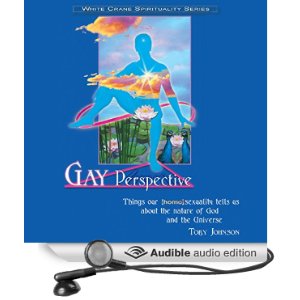
Gay Perspective
Things Our [Homo]sexuality
Tells Us
about the
Nature of God and
the Universe
Gay
Perspective is available as an audiobook narrated
by Matthew Whitfield. Click
here
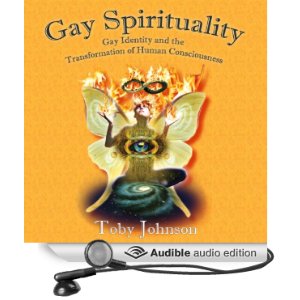
Gay Spirituality
Gay Identity and
the Transformation of
Human Consciousness
Gay
Spirituality is now
available as an audiobook, beautifully narrated by John Sipple. Click here
Charmed
Lives: Gay Spirit in Storytelling
edited by
Toby Johnson
& Steve Berman
Secret
Matter
Lammy Award Winner for Gay
Science Fiction
updated
Getting Life in
Perspective
A Fantastical Romance
Getting
Life in Perspective is available as an
audiobook narrated by Alex Beckham. Click
here
The Fourth Quill
originally published
as
PLAGUE

The Fourth Quill is
available
as an audiobook, narrated by Jimmie
Moreland. Click here
Two Spirits: A Story of
Life
with the Navajo
with Walter L. Williams
 Two
Spirits is available as an
audiobook narrated by Arthur Raymond. Click
here Two
Spirits is available as an
audiobook narrated by Arthur Raymond. Click
here
Finding
Your Own True Myth: What I Learned from Joseph
Campbell
The
Myth
of the
Great Secret III
In Search of God in the Sexual Underworld
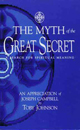
The Myth of the Great
Secret: An Appreciation of Joseph Campbell.
This
was the second edition of this book.
Toby Johnson's
titles are
available in other ebook formats from Smashwords.
|
G&L Review Worldwide
Review of GAY PERSPECTIVE
by Donald Boisvert
Other
reviews of Gay
Perspective
Read Toby Johnson's
review of Boisvert's Sanctity and Male
Desire
Here's Donald Boisvert's review (which appeared in a
somewhat shortened
form) in The G&L Review discussing Theodore Jennings' book The
Man Jesus Loved and Toby Johnson's Gay Perspective in an
interesting discussion of the nature of "gay spirituality."
The G&L Review is a
wonderful magazine, a journal of ideas about gay life, that deserves
community support.)
In
recent years, queer scholars have been paying a great deal of attention
to religion. This may seem odd, or perhaps even perverse,
considering the negative attitudes of most religious traditions with
respect to all things homosexual or even slightly queer. Some
might say this is an honest attempt at struggling with our most
oppressive demons, while others might opt for a more cynical
explanation, arguing that it is all simply a dead-ended attempt at
further collective delusion. As Toby Johnson would no doubt
claim, perhaps "being gay" and "being spiritual" fit together quite
naturally, like Gilbert and Sullivan. Or more appropriately, in
this case, like top and bottom.
There now
exists a fairly
well-defined field of study called gay
spirituality. Its practitioners tend to fall into two camps:
those concerned with scripture and the rehabilitation of biblical texts
that have been historically dismissive and intolerant of homosexuality,
and what could be called the Higher Consciousness group, more in the
tradition of Edward Carpenter and Harry Hay, who believe that gays (and
yes, even lesbians) share a unique vocation as spiritual guides and
change agents. In most cases, this latter group tends to draw its
inspiration from pre- or non-Christian androgynous traditions.
Theodore Jennings and Toby Johnson represent rather well, each in his
own way, these two complementary outlooks.
Jennings'
The Man
Jesus Loved is, by far, the more
scholarly of
the two books. Though its central theme is not totally original,
the book has garnered a modest amount of attention in claiming that
Jesus was gay and that he had a lover, something shocking, if not
downright blasphemous, for most fervent Christians. A professional
theologian and United Methodist clergyman, Jennings provides what he
terms "a gay reading" of the New Testament scriptures by exploring in
detail some of their more mysterious yet compelling homoerotic
narratives, such as the centurion's lad and the naked youth in the
Garden of Gethsemane. For Jennings, the teachings of Jesus were
powerfully subversive of traditional gender and family arrangements,
primarily those that were ascetic or body-denying in nature, and his
own open and generous lifestyle was defiantly affirmative of same-sex
desire. To the question of whether Jesus was gay, he answers
rather cautiously by asserting that "Jesus' primary affectional
relationship was with another man, one who is called in the Gospel of
John "the disciple Jesus loved" and the reading of the references to
this relationship that makes the most sense is one which infers a
relationship of physical and emotional intimacy, a relationship that we
might otherwise suppose would be the potential subject of erotic
mediation, of sexual expression." (p. 233)
It's
precisely this sort of
careful crafting that makes Jennings'
argument so compelling. But who exactly was the so-called
disciple Jesus loved? Tradition has it that it was John the
Evangelist. There are other suspects, however, and Jennings
explores the pros and cons of all of them: Lazarus, Andrew, Nathaniel,
Philip, Thomas, Joseph of Arimathea, among others, perhaps even someone
not named. Jennings' conclusion is that he can't conclude with
certainty. This does not mean, however, that the quest, in and of
itself, was not an exciting one. That, in fact, is the most
engaging thing about this book. It leaves no stone
unturned. It takes a holistic view of New Testament teachings on
sexuality, specifically their homoerotic dimensions, and it builds a
solid case for a man-loving Jesus. If that isn't enough to excite
any queer, I'm not sure what would.
Jennings'
writing is lucid,
reasoned, precise, and well referenced, and
his argumentation is nothing if not persuasive. All the
appropriate New Testament passages, canonical and not, find themselves
dissected. This is the sort of book that, by some strange and
wonderful twist of fate, you hope might fall into the hands of all
those self-righteous and insufferable televangelists, only to be the
cause of their sudden demise by heart attack (a most unchristian
thought, I readily confess). Though the book does bite back, it
is a quiet masterpiece of reasoned discourse: calm, soothing, and
brilliantly thorough in its theological analysis and
implications. You cannot help but admire its fine and elegant
structure. Jennings' inspired method of not doing the texts
violence, of letting them speak at their most obvious level of
discourse, works wonders. You walk away fully confident that
Jesus was a gay man, that he lived openly with "the beloved disciple,"
and that who it was does not ultimately matter. If only, however,
everyone were as calm and rational — and ultimately convinced — as
Jennings.
For that is
the
problem. Not everyone will be convinced, try as
you may. But then again, why should you even want to? There
can be no doubt that, down through history and still today, the
Judeo-Christian scriptures have been a (if not the) major source of
institutionalized homophobia. The efforts of those scholars, such
as Jennings, who systematically and eloquently refute such
argumentation are therefore important and needed. We cannot let
the religious bigots, of whatever denominational persuasion, lay
exclusive claim to the biblical terrain. Our lives can depend on
it. Other scholars, however (and I admit I am one of them), are
becoming increasingly impatient with the constant need for scriptural
refutation, playing, as it were, the game of the enemy, wasting time
engaging them on their turf, always being on the defensive. Is it
not better to move beyond the bible, to begin crafting a spirituality
emerging from our own lives, one not requiring some scriptural
justification or blessing, as feminists have been doing for so
long? If Jennings can prove that Jesus was a man-loving man, all
the more power to him and, by extension, to all of us. But to the
church-going homophobe, will it really make any difference?
Doubtful. Is it not perhaps time to move on?
To Toby
Johnson, the answer
is a resounding "yes." For him, all
religion is a metaphor, and this is succinctly and engagingly expressed
in Gay Perspective. The author of Gay Spirituality and
former
editor of White Crane Journal, Johnson has long been a staple
in the
field. His gamble in this most recent book is to argue, somewhat
too prosaically, that gay men possess a unique "perspective," a special
intuition that, by virtue of their marginality, makes them particularly
susceptible to spiritual insight. Unfortunately, such
observations, though they may ring true at the level of anecdote, are
all too often coupled with quick-and-easy clichés. He writes, for
example: "There are certain talents that seem to come with being gay:
the ability to decorate a room or to assemble an outfit, for
example. These talents come from what we earlier called gay
intuition. Also among these gay talents are mythopoesis,
religion, and the creation of liturgy and ritual." (p. 130) While
it may be sadly true that the world possesses an over-abundance of
liturgy queens, it is highly doubtful that they all partake equally of
the collective pool of good taste. Such statements unfortunately
tend to discredit Johnson's main argument about the distinctive
cultural role of gay men, which, though it remains a battered tenet of
much gay spirituality, he still manages to defend with eloquence,
insight, and much vigor.
Johnson's
approach is that
of the eclectic pedagogue. With
chapter titles such as "Things our Homosexuality Tells Us About:," he
discusses a surprising mix of topics running the gamut from Life to
God, while passing through Sex and Religion. All the biggies, in
fact. Throughout, he sticks to his core argument that gay men are
"blessed" in some very special way, the carriers of a higher (and no
doubt more refined) form of consciousness. There are some
perceptive, if slightly off kilter insights, such as when he refers, in
chapter 9, to the Mystical Body of Christ: "All of us are organs in the
Body of Christ. Following this metaphor, we might say gay men
play the role of the penis of the body of Christ (and lesbians, that of
the clitoris of this sexually androgynous body)." (p. 198)
Christocentrism aside, this might well be a gay man's fantasy. It
certainly provides erotic food for thought. This is what Johnson
does best. You may disagree with him, consider his ideas
outlandish, you can't help but resonate to their inner logic and
appeal. We all know we're different as queers, without really
being able to put our finger on why. Johnson puts his whole hand
-- all five fingers -- on, or rather into,
it.
For a gay man
looking for
pride in who and what he is, and particularly
for young just-came-out men, Gay Perspective comes as a
godsend.
It is a passionate, defiant, and challenging piece of work.
Thankfully, Johnson gives straight men a run for their money, laying
blame for much of the world's problems at their cocky and insecure
feet. Few authors have dared to tackle this issue head-on, but he
does so with all the aplomb and verve one would expect from an
intelligent gay man. He even asks sardonically: "Doesn't it
sometimes seem that homosexuality might be the cure for all the
problems of straight men?" (p. 90) I can hear a deafening echo of
affirmative gay voices from sea to shining sea. Spiritually,
however, Johnson is not without his favorites. A Catholic by
upbringing (he spent several years in seminary with two different
religious orders), he now practices Buddhism, with a splash of New Age
flavor (his glowing reference to A Course in Miracles is telling in
this regard). In the latter part of his book, he spends several
chapters expounding the non-dualistic Buddhist way, thereby suggesting
that it and the so-called "gay perspective" are one and the same.
Though this may be a valid spiritual insight, it further dilutes his
earlier defense of gay intuition as something critical, marginal, and
ultimately subversive of both mainstream culture and religion.
There can be
no doubt that,
through these texts, Jennings and Johnson
make important and relevant contributions to a queer understanding of
the dynamic that is religion. In itself, this is laudable,
considering the natural dislike, if not outright fear, that many gay
men tend to exhibit when it comes to this topic. Jennings' The
Man Jesus Loved will endure, if only because of the boldness and
eloquence of its thesis. Johnson, however, is not to be
neglected. What he has succeeded in doing, in Gay Perspective and
in his earlier works, is to anchor solidly the gay experience in the
language and mythos of spiritual enlightenment, certainly no small
task. If Theodore Jennings' Jesus is delightfully queer and
sexual, then Toby Johnson is the guy who makes him resonate with
post-modern, cosmic vibes.
All of which
brings us back
to the dilemma of gay spirituality.
Will Jesus being gay, or queers being more enlightened, really make a
difference in our lives? For the gay man, believing or not,
perhaps; for the homophobe, one can only hope. In fact, that's
what gay spirituality is really all about at heart: conversion.
An old fashioned religious idea if there ever was
one.
Other
reviews of Gay
Perspective
Back
to main
page
Back to Toby Johnson's books
To read Toby Johnson's report
on the
Gay Spirituality Summit
|