|
Contact Us Table of Contents Search Site Google listing of all pages on this website Site Map Toby Johnson's Facebook page Toby Johnson's YouTube channel Toby Johnson on Wikipedia Toby Johnson Amazon Author Page  Secure site at https://tobyjohnson.com  Also on this website: As an Amazon Associate
I earn from qualifying purchases. Toby Johnson's books: Toby's books are available as ebooks from smashwords.com, the Apple iBookstore, etc. FINDING
YOUR OWN TRUE MYTH: What I Learned
from Joseph Campbell: The
Myth
of the
Great Secret
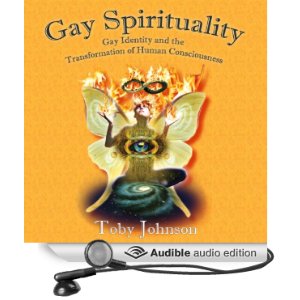
III GAY SPIRITUALITY: The Role of Gay Identity in the Transformation of Human Consciousness
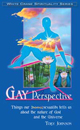
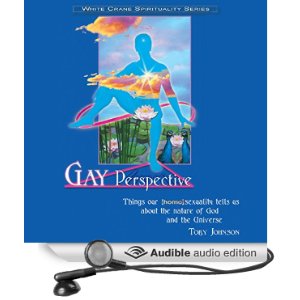
GAY PERSPECTIVE: Things Our Homosexuality Tells Us about the Nature of God and the Universe
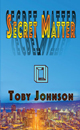
SECRET MATTER, a sci-fi novel with wonderful "aliens" with an Afterword by Mark Jordan
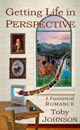
GETTING
LIFE IN PERSPECTIVE:
A
Fantastical Gay Romance set in two different time periods
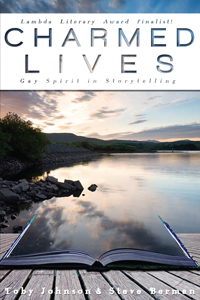
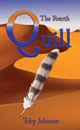
THE FOURTH QUILL, a novel about attitudinal healing and the problem of evil  TWO SPIRITS: A Story of Life with the Navajo, a collaboration with Walter L. Williams  CHARMED LIVES: Spinning Straw into Gold: GaySpirit in Storytelling, a collaboration with Steve Berman and some 30 other writers
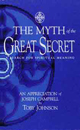
THE MYTH OF THE GREAT SECRET: An Appreciation of Joseph Campbell
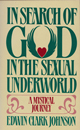
IN SEARCH OF GOD IN THE SEXUAL UNDERWORLD: A Mystical Journey
Books on Gay Spirituality: White Crane Gay Spirituality Series
Articles and Excerpts:
Review of Samuel Avery's The Dimensional Structure of Consciousness Funny Coincidence: "Aliens Settle in San Francisco" About Liberty Books, the Lesbian/Gay Bookstore for Austin, 1986-1996 The Simple Answer to the Gay Marriage Debate A Bifurcation of Gay Spirituality Why gay people should NOT Marry The Scriptural Basis for Same Sex Marriage
Gay ConsciousnessQ&A about Jungian ideas in gay consciousness What Jesus said about Gay Rights Common Experiences Unique to Gay Men Is there a "uniquely gay perspective"? Interview on the Nature of Homosexuality What the Bible Says about Homosexuality Mesosexual Ideal for Straight Men Waves of Gay Liberation Activity Wouldn’t You Like to Be Uranian? The Reincarnation of Edward Carpenter Why Gay Spirituality: Spirituality as Artistic Medium Easton Mountain Retreat Center Andrew Harvey & Spiritual Activism The Mysticism of Andrew Harvey
Enlightenment
Joseph Campbell's description of Avalokiteshvara You're Not A WaveJoseph Campbell Talks about Aging What is Enlightenment? What is reincarnation? How many lifetimes in an ego? Emptiness & Religious Ideas Experiencing experiencing experiencing Going into the Light Meditations for a Funeral Meditation Practice The way to get to heaven Buddha's father was right What Anatman means Advice to Travelers to India & Nepal The Danda Nata & goddess Kalika Nate Berkus is a bodhisattva John Boswell was Immanuel Kant Cutting edge realization The Myth of the Wanderer Change: Source of Suffering & of Bliss World Navel What the Vows Really Mean Manifesting from the Subtle Realms The Three-layer Cake & the Multiverse The est Training and Personal Intention Effective Dreaming in Ursula LeGuin's The Lathe of Heaven Gay
Spirituality
|
Charmed
Lives:
Gay Spirit In Storytelling
(Spinning
Straw into Gold) An Anthology in White Crane Institute's Wisdom Series from Lethe Press Links to purchase from amazon.com, the author or Lethe Press Digital-on-Demand Reviews and articles about CHARMED LIVES and contributors In the interest of fair reporting, I'm including the bad reviews here as well White Crane Journal #73 Reviewed by Steven LaVigne (Original Cover with Toby & Kip's fingers drawing a long winning straw) There are books that readers simply don’t want to come to an end, and former White Crane editor Toby Johnson and writer Steve Berman have edited one of them. Charmed Lives: Gay Spirit in Storytelling is so filled with gems (thirty-five passages by writers as diverse as Perry Brass, Mark Thompson, Malcolm Boyd, Jeffrey Beam, James Van Buskirk, Don Clark, Bert Herrman and Dave Nimmons, and White Crane columnist Andrew Ramer, to name but a few of them) that these stupendous tales of romance, music, sex, harassment and coping with the modern world equally make it a savory pleasure that’s tough to put down. Among the highlights of this treasure trove: Mark Abramson explores his love for Ella Fitzgerald and how her particular style of jazz music helped him cope as friends succumbed to AIDS; Eric Andrews-Katz’ self-esteem is given a boost after meeting an attractive angel one night in a bar, while the leading character in Victor J. Banis falls in love with Douglas, the man who takes no notice of a face that resembles “The Canals of Mars.” J.R.G. De Marco’s ghost story, “Great Uncle Ned,” is the first passage that’s a topper, making the reader thinking nothing else can be better. Romantic and sexy, De Marco takes the reader on an exquisite gothic roller coaster ride. Some of the stories are set pre-Stonewall, while others are post-AIDS, but every contribution, even reflections on why writers work the way they do, addressing topics from sex to marriage to everlasting love are outstanding in their own way. Among the other “toppers” are Jay Michaelson’s “The Verse,” wherein any mention of the “sin” of homosexuality disappears from every copy of Biblical scripture, from the Torah to the Gospels, as the worldwide news coverage affects Michaelson’s characters. Should he be forgotten, Bill Blackburn’s lovely tribute “My Last Visits With Harry,” reminds us that Harry Hay, a founder of the Radical Faeries, was an exceptional pioneer for gay rights. Andrew Ramer imagines himself as Albert Gale, Dorothy’s brother, who doesn’t go over the rainbow, but, instead, finds true love on the prairie. Personal experiences are a strong part of “Charmed Lives.” Don Clark, whose book, “Loving Someone Gay” was so helpful when I was first coming out, discusses his personal life, while David Nimmons relates how his program of Manifest Love began on a Fire Island dance floor. Johnson and Berman share experiences from their lives as well. I hope that I’ve whetted our appetite and that you’ll take similar pleasures when reading “Charmed Lives: Gay Spirit in Storytelling,” which was a finalist for a 2007 Lambda Book Award. Even so, it’s a winner without awards. January 17 2007, Out Front Colorado ran an interview with Charmed Lives contributor Dan Stone by Jeboa Boreanaz An inspirational new anthology from editor Toby Johnson aims to inspire with positive stories of gay men following their own spiritual paths. Local writer and life coach Dan Stone is one of the contributors to Charmed Lives: Gay Spirit in Storytelling. Jeboa Boreanaz: Tell me about your story in Charmed Lives. Dan Stone: I have an essay (called “This I Know”) that is really sort of about my own personal transition from 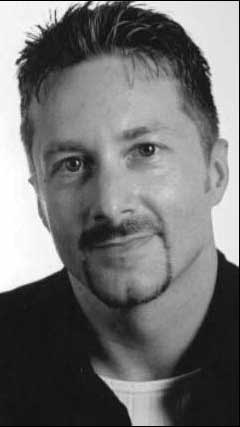 believing
in an external authority to
tell me how to approach my life
from a spiritual perspective, such as
the church or the bible. I was raised a
fundamentalist minister’s son, so my
own religious background was a pretty
believing
in an external authority to
tell me how to approach my life
from a spiritual perspective, such as
the church or the bible. I was raised a
fundamentalist minister’s son, so my
own religious background was a prettystrict conservative one, and that was true for a lot of us (in the anthology). Then I moved towards more of what I would call the mystic path, where I’m relying less on external authority such as the bible or the church and more on my own experience and intuition and my own personal connection to god or the divine. JB: So faith and spirituality have always played a big part in your life? DS: It’s always been a really important aspect of my life. It was sort of pounded into me in some ways growing up, as involved in the church as I was for so many years. I didn’t come out until I was about 30, and before that I was very active in the church I was brought up in, which was a fundamentalist Christian denomination. I taught Sunday school for years and years, and I was in church three times a week, sang in the choir and all that. Having some sort of active spiritual component in my life has always been pretty important, because I kind of inherited that from my family and my upbringing. JB: And when you came out? DS: When I came out and left the church and went out on my own, I found that I still wanted to have it in my life in some way. I didn’t know how to go about having it, but I still cared about some kind of connection to something bigger than myself, so what I started doing was just reading anything I could get my hands on regarding spirituality. Eastern philosophy. Pagan spirituality. All sorts of things that were very different from what I grew up with. JB: What does ‘gay spirituality’ mean? DS: One of the things you get a sense of when you read this book is how incredibly diverse a community we are in this respect as well in all others. We talk about the gay community and we like the idea of these common bonds that we have, but when you really start to look at us you begin to realize how incredibly different we are in every way, and spirituality is no different. We come from all different places and perspectives and experiences. But one commonality I think is that we are all directly or indirectly trying to feel as good about ourselves as we can and trying to find someway to integrate our sexuality into who we are as people. For a lot of us, being gay was presented to us as a problem or an obstacle to being connected to god. It was unholy or unsacred and something that we either had to deny or push away. So now we can realize that being gay is as sacred a part of ourselves as anything else. JB: What do you think readers will get from this book? DS: Readers will take away a sense of the very diverse spiritual experience that is characteristic of our community, and they will see and hopefully understand that there are a wide range of possibilities as far as how these writers have learned about themselves and have moved within there own lives from a place of maybe some difficulty and struggle with their sexuality to a much more accepting and happy place. Hopefully the reader will be able to feel these writers feeling good about themselves, and that invites the reader to find ways to feel good about themselves as well. ■ BAR -- Bay Area Reporter, San Francisco Published 02/15/2007 If the spirit moves youby Jim PiechotaThis impressive, skillfully assembled collection by Lambda Literary Award-winning author Toby Johnson and short-story writer Steve Berman contains over 30 uplifting spiritually-accessible essays, personal reflections, and fictional tales that will appeal to every sensibility within the GBLT spectrum. Derived from the White Crane Journal and published as part of their Wisdom Book Series, the book is meant to provide "insight, discernment and spiritual discovery" for gay people who are fortunate enough to have tapped into their mystical side, and also to "offer new stories, new ways of thinking about the gay experience." Prolific San Francisco online blogger Mark Abramson leads off the compilation with "Ella, Kelly and Me," a wonderfully vivid, bittersweet, heartbreaking journal of a Castro Street bartender and his travails through the deep darkness and the subsequent radiance of San Francisco history. Abramson's combination of charm, engaging prose, and a working knowledge of local history will leave readers aching for more. His bio mentions a forthcoming novel series; like this story, they're set in the Castro District, a place where his garlanded prose seems to bloom best. Fleeting scenes of first love and unfinished business decorate many of these stories, like Eric Andrews-Katz's sweet tale of two enamored boys; the mutual attraction discovered while waiting in line at the post office provided with great moxie by John McFarland; and Toby Johnson's stunning recollection of 1970s bathhouse culture, with a sage message resulting from a sex partner's harsh rejection: "A pang of loss struck me, but I understood the spiritual lesson to live in the present and not to be attached, to enjoy the joy I was feeling without trying to possess and hold onto it." Death and coping with what remains loom large in stories like Michael Gouda's poignant "After Edward," much as living the "sweet life" does for Bryn Marlow in his essay "What Two Men Do in Bed," which, in the span of two pages, relates the splendor and the exuberance of a long-term relationship. Other highlights include Jay Michaelson's clever story on the Jewish experience; a piece on the atrocious "carving" vandalism done to gay-themed novels and resource materials at the San Francisco Public Library; David Nimmons' affirmative actions and efforts to conquer cynicism in gay circles with his group "Manifest Love;" and the incredibly moving portrait of Lewis DeSimone's transformative work with Castro-area AIDS hospice Maitri. Jeffrey Beam's beautiful commentary in "What Queer Spirit Sees" encourages all of us to look within our own hearts and souls for the divinity we may be seeking, as does Will Gray in his profound essay "Gay Spirituality." "I see no existence of a god, but that doesn't prevent me from sharing moments of transcendence and gratitude." Collectively, the writers have produced a personally empowering, kaleidoscopic tapestry. This anthology can be kept on a shelf and referred to for a bit of inspiration on a particularly bad day, or as a resource that keeps the good karma flowing in balance with our everyday lives.
February 25, 2007 Reading & booksigning at the San Francisco Public Library Authors in the S. F. Bay Area gathered for an event at the LIbrary, hosted by contributor Jim Van Buskirk. He 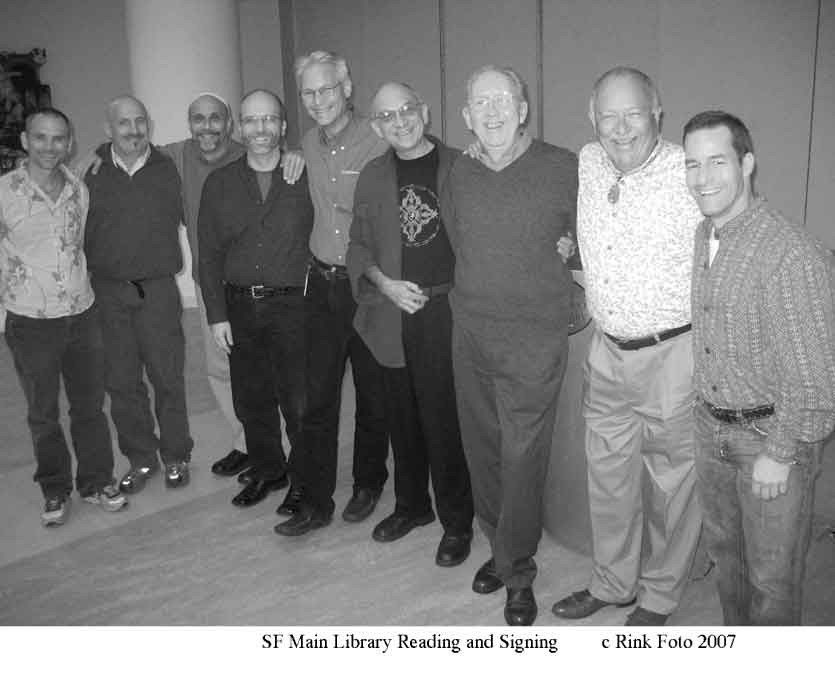 re we are in a photo by S.F. photographer
extraordinaire Rink re we are in a photo by S.F. photographer
extraordinaire RinkEDGE Entertainment Contributor Tuesday Mar 13, 2007 by Lewis Whittington Transcendence comes with the Queer territory," Jeffrey Beam breezily proclaims in his essay "What Queer Spirit Sees," and that spirit is joyously celebrated in the peck of short stories that comprise Charmed Lives. This collection of fiction and nonfiction would be fun to read either in the winter when hibernating away from the madding crowd, or in the summer on the beach with everybody chattering around you. Many of the stories have a spiritual objective, but that doesn’t exclude gay carousing, cruising, canoodling, or, for that matter, issues of pain, suffering, or complex emotions. Gay spirit, both living and dead, tragic and comic inhabit this book. Consider some of the 32 titles - "What Two Men Do In Bed," "Gay Spirituality?," "Tom or an Improbable Tail," "The Bells of St. Michael’s," "So What is Charm" - and you know this is not your average gay pulp fiction or a G-rated gay picnic either. These are intimate, exciting stories, carefully chosen by the editors - contributors Toby Johnson and Steve Berman, whose story "His Paper Doll," involving voodoo doll boi club hook-ups is club-caustic. In Eric Andrews-Katz’s "An Angel on the Threshold," main character Mark is carrying a longtime torch for his ex-lover, and about giving up. To torture himself more, he goes to the club and itemizes his character flaws when he is hit on by Gabriel who, he thinks, is completely out of his league. The gorgeous Gabriel seems to be able to read his mind and emotions, so of course this makes Mark flee, since he’s not one to accept a mercy fuck. Mark’s reawakening comes to pass on the street, where his lovelorn phantoms meet bruised reality under the pen of Andrews-Katz. Don Clark sets up his gay journey in "A Path of Mirrors" with the idea that "our spirit guides are not hidden from normal sight or cloaked in great mystery. It just may be that they are unrecognized at first sight." The specter of the great Ella Fitzgerald comes alive in Mark Abramson’s "Ella, Kelly and Me," about a bartender in the Castro district who becomes an eternal Ella fan (like we all eventually do) and actually gets to speak to her on a hillside before she gives a concert. Later, her music proves to be sustaining in times of deep crisis. "The Canals of Mars," by Victor J. Banis, is about a beautiful man whose face is scarred in an accident, and who goes into self-imposed exile because he thinks he’s too ugly to exist. He is invited to recover and rest at the seaside home of an acquaintance who falls in love with him. A Platonic discussion of what beauty is, and isn’t, is the backdrop for this touching story. Sterling Houston’s "Beyond the Blue Bardo (Manhattan Island 1965)" reads like an aria and paints a portrait of being young, black, and proud in the day: "The black sissy has earned the right to strut, no lie," he writes, before he dances into transcendence with lines like, "Winds of disdain whip past her ears and get incorporated into the music, translate themselves into a sphincter thrust that has become the envy of the civilized world." That’s before we even get the backstory, summed up with, "I got my drama queen genes from Miss Lula" - the aunt who raised him. It is no surprise to read in the bios that Houston is a performer and theater director: even in his writing all the world is a grand stage. "After Edward," by Michael Gouda, is about grief and reconciliation following a gay widower’s journey back to life in the months after his lover’s death. This is an anti-"Things happen for a reason" story that tells of real emotion and real experience, a story that ventures past platitudes and knowing formulas. Gouda’s narrator doesn’t hold back with friends who expect him to pull himself together: "How the fuck would YOU know what Edward would or wouldn’t have wanted me to do?" he fires back. "Shades" by Bill Goodman pays a comic visit to a middle-aged gay couple entering their golden years. When one of them dies, the survivor sees his specter a la Dolly Levy through the actions of others. Short interludes such as Bert Herrman’s "So What is the Charm?" asserts, "A charmed life is a life of faith, though not necessarily on of religious faith. What matters is authenticity." These intimate, thoughtful gay journeys of self-awareness are celebrations of our multi-faceted liberation. Publisher: Lethe Press. Publication Date: November 15, 2006. Pages: 308. Price: $18. ISBN-13: 978-1590210161 Lewis Whittington writes about the performing arts and gay politics for several publications. The Letter theletteronline.com March 2007 Rainbow of Thought Accessible
Spirituality
The short stories and non-fiction personal essays collected in this Lambda Literary Award-nominated compilation offer encouragement and motivation for those who integrate spirituality into gay life, and insight for those who wonder about the distinction between spirituality and religion. As such, the book makes spirituality accessible to readers across the GLBT spectrum, though it most directly addresses gay men. The book includes a mix of personal essays, thoughtful reflections and fictional short stories. In his introduction, co-editor Toby Johnson emphasizes the power of story and its pivotal role in shaping consciousness. How we see ourselves and the stories we tell about our place in life really do have transforming power, he says. In his companion introduction, co-editor Steve Berman advocates a focus on the small golden moments of our lives: “life may not be fair, but it can still be enjoyed.” That spirit of joy appears in What Two Men Do In Bed, non-fiction by local writer Bryn Marlow, one of two contributors from The Letter’s six-state distribution region. From his home in Indiana, Marlow pulls back the sheets on his own long-term gay relationship. What goes on under the covers at his house involves a depth of intimacy, humor and playfulness that adds sweet sparkle to the bond between two men. Magic holds sway in another regional author’s contribution. Ruth Sims’ Tom Or An Improbable Tale tells about the day William comes home from work to find who looks like the incarnation of Apollo and Ganymede sitting on his sofa—stark naked. The adventure begins. A more quiet venture though one no less magical spurs the plot in Victor Banis’ offering, The Canals of Mars. Its narrator experiences first hand the transforming power of acceptance and love to overcome issues of physical appearance and ageism. In similar fashion, each of the stories in this collection enlarges upon aspects of the gay experience in heartfelt ways. Johnson and Berman have gathered contributions from over 30 writers who affirm the pleasures of physical passion while suggesting there is more to gay life than sex. This should come as no surprise to readers of White Crane, a periodical devoted to exploring spiritual consciousness among gay folk. Here is a take on spirituality accessible to those who because of their sexual orientation have received poor treatment at the hands of organized religion. Here is spirituality expressed as concern for others, capacity for awe, and courage to tell the truth about one’s deepest self. Here is spirituality in story form, in essay and in thoughtful commentary—readable, approachable and enlightening. While the fiction runs from romantic to historical, from supernatural to prosaic, themes of love, desire and attraction are near constants. Boy does not always get boy—or angel or devil or ghost or were creature, as the case may be. But the reader does get insight into the human condition and a glimpse of gay spirit operative in our desires. Andrew Ramer spins the story, not of Dorothy and Toto, but of Dorothy’s gay brother Albert who finds his way to an Oz of his own making. Set in the Wild West, The True and Unknown Story of Albert Gale, Told by Himself rings with faint echoes of Tom Spanbauer’s The Man Who Fell in Love With the Moon. The whole world
echoes
with the news that a passage in the Jewish Torah interpreted to condemn
acts of gay love has disappeared, as imagined in Jay Mark Horn sets Musuko Dojoji in Japan, and incorporates one of that country’s oldest folk tales into a compelling story that blurs the boundaries between fact and fiction. Horn is forthright about this in his epilogue; would that the editors had been as forthcoming in alerting the reader as to which pieces are fiction, which not. Instead the reader is left to decide whether a story is based in fact or fiction. Maybe the editors’ point is that all stories contain truth. Nevertheless, enhanced clarity would aid the truth-telling process. For example, halfway through Lewis DeSimone’s Left With Love, the reader may be unsure whether the events related actually happened or if the hospice patient may suddenly reveal himself to be a god of the ancient Greeks reincarnate. The man does die, however, and the hospice volunteer mourns his loss even as he opens himself to lessons of life and love. Must be meant as the touching piece of non-fiction it is. No question about the intent of David Nimmons’ essay Manifest Love. He calls gay men to awareness, understanding and action, as does Bert Herrman in So What is the Charm? Both these authors pack their sentences with punch. Both challenge GLBT persons to use their differing sexual orientation to see the world with different eyes, build on their strengths, and act on what tugs at their hearts. But let go of judgments, writers in this anthology advise. Expect no formulaic answers for finding truth. Rather, recognize that each person’s journey is individual and should be honored as such. Dan Stone’s “This I Know” succinctly relates one man’s disaffection with organized religion and subsequent realization that there are multiple paths to paradise, even as Will Gray’s Gay Spirituality? details how he as an atheist might be described as embodying spirituality. Life offers opportunities to learn. Charmed Lives offers glimpses of spirituality in action, written in such a way as to be accessible to the average reader. Readers will not find every piece in the compilation equally compelling. Some stories tend toward the cliche; some lack the finesse of polished writing. But with over 30 selections to choose from there is more than enough to incite and inspire. In a market where
many
gay-themed anthologies offer little more than sex, sweat and sperm,
this collection shines nearly as brightly as the straw-into-gold being
spun on its cover photograph. Life offers sensual pleasure, yes, and
much more. These pages serve notice that gay life can be hot and
sweaty, sweet and romantic, touched by magic, tinged with sadness,
punctuated with moments of deep love and ecstatic joy.
Authors’
work
promotes positive gay fiction By
Larry
Nichols PGN Staff Writer
The
authors and publishers of “Charmed Lives: Gay Spirit in Storytelling” —
a new collection of gay short stories — want readers to know that there
is more to the world of gay fiction than fantasy sex romps and gay
strife.
Minneapolis, MN Issue 305 By Ethan Boatner, Editor Charmed Lives: Gay Spirit in Storytelling Ed. by Toby Johnson and Steve Berman Lethe Press $16 “Charmed” perfectly fits these 37 stories, not trivializing, but invoking “ensorcelled,” “bewitched.” Old as mankind, storytelling is a way to entertain, educate, and make sense of the world. As Mark Horn, author of “Musoko Dojoji,” explains, “Just because it didn’t happen, doesn’t mean it’s not true.” Some pieces are memoirs of past lovers and events (though each individual sees an “actual” event differently), like Bill Blackburn’s “My Last Visits With Harry” [Hay], while some, like Jay Michaelson’s “The Verse,” are fantastic “what ifs.” Suppose, Michaelson posits, one morning, people wake to discover that Leviticus 18:22 has vanished from every kosher Torah—not scratched out, erased, or removed. No spaces—just gone. What might be the reactions of Jews? Christians? Muslims? Not what you’d predict, it seems. Nor, you will find, is the answer to Bryn Marlow’s charming “What Two Men Do in Bed.” Midwest Book Review June 2007 Lori L. Lake Long-time spiritual writer Toby Johnson and publisher/writer Steve Berman have put together a much-needed collection of essays and stories about gay men and spirituality. So often, anti-gay activists go out of their way to malign gay people, and homophobes in mainstream churches often block gays from worship and religion. This collection offers an alternative to those small-minded persecutions. What Johnson has been saying for years in books like GAY SPIRITUALITY and GAY PERSPECTIVE is that the spiritual consciousness expressed by gays—indeed, by all GLBTQ people—is a vital and evolutionary step forward for everyone on the planet. No longer need we be trapped in meaningless, dogmatic, fear-based, or male-dominated religious practices. There’s hope and inspiration to be found by, for, and about homosexual lives. Berman and Johnson have managed to get stories and essays from many literary lights: Mark Thompson, Malcolm Boyd, Perry Brass, Victor J. Banis, Jeffery Beam, Mark Abramson, and many others. The inspiring work of educators, community activists, and religious experts such as David Nimmons, Mark Horn, Dan Stone, Michael Sigmann, Bill Blackburn, and Donald Boisvert are also featured. CHARMED LIVES is a Lambda Literary Award Finalist in the category of Best Anthology, and it’s fully deserving. Every story, every essay is a gem that reveals the beauty, strength, and value of gay voices. As Bert Herrman writes in his essay, “Grace is not really magic, it is a natural state of being, but for those who reach it, it works like a charm.” Reading these pieces will comfort, inspire, and charm anyone seeking to learn more about the wonder of gay spirit in storytelling. Highly recommended. Wayves -- the queer newspaper for Atlantic Canada June 2007 Ralph Higgins Queer lives are tribal. Our strongest connections are often not with our biological family but rather with the gay men and women who found for themselves, and then offered to us, acceptance, sanctuary and community. Our characters have been tempered by the fires of adversity and our strength grows as we face hostility, ignorance and even death - when we face them together. The tribe provides a place where we belong, a sense that we are where we are supposed to be. Yet, because the tribe is relatively new the wisdom of the elders, the shared stories and experiences of our fellow tribe members is not widely known. The telling of stories is essential and Toby Johnson and Steve Berman in Charmed Lives: Gay Spirit in Storytelling have compiled a collection of stories, poems, personal accounts and essays that show the fundamental connections that unite our experiences. Connections between lovers, between friends, between generations, between the teller of stories and the listener. And throughout all the tales it is the personalities of the characters that capture us, their spirit that enters into us, becomes part of our experience like shared memories just as the people - both real and imagined - become part of our family tree. They make us feel glad and proud to belong to the same tribe. These stories are very moving. They will move you to laughter, to tears and move your heart to beat a little faster, stronger. These are stories about love - a basic human need, but one that we still have trouble accepting for ourselves, with all its joys, sorrows, and pleasures. With so few role models that show our queer reality, these stories are essential reading. The contributors - too many to list here - are from a wide range of backgrounds and interests. There are stories flavoured with science fiction, with the old west, with supernatural spirits; and essays and musings reflecting different philosophies and religious leanings. Wild imaginings and the day to day routine all have a place in these pages. The focus is not on the obstacles and difficulties of gay life but on the fact that our lives are indeed charmed ones. Charmed Lives: Gay Spirit in Storytelling reminds us of the richness of our queer existence and how very lucky we are. OutSmart, July 2007 Houston's gay, lesbian, bi, and trans magazine Angel Curtis Charmed Lives: Gay Spirit in Storytelling Various writers White Crane Books (www.whitecranebooks.org) The stories we tell ourselves define who we were, who we are, and, most importantly, who we will be. This compelling anthology presents an alternative to the stories our culture tells about gay people. Part spiritual journey, part romance, but all alive, the stories in this book give us a new way of looking at both our spiritual and mortal selves. This one is not to be missed. Here's the Table of Contents to tempt readers Introduction: Straw into Gold Toby Johnson Introduction: Straw is Neither Dross nor Gold Steve Berman Ella, Kelly and Me… Mark Abramson The Story Behind the Story Perry Brass An Angel on the Threshold Eric Andrews-Katz Shades Bill Goodman The Canals of Mars Victor J. Banis What Queer Spirit Sees Jeffery Beam After Edward Michael Gouda What Two Men Do In Bed Bryn Marlow Great Uncle Ned J.R.G. De Marco Beyond the Blue Bardo Sterling Houston The Verse Jay Michaelson My Last Visits With Harry Bill Blackburn Reversing Vandalism Jim Van Buskirk Grandfather’s Photograph Neil Ellis Orts Gay Spirituality? Will Gray “Charmed, I’m Sure” Mark Thompson and Malcolm Boyd Viewing the Statue of David Jim Toevs The True and Unknown Story of Albert Gale Andrew Ramer Tom or An Improbable Tail Ruth Sims Free Speech Martin K. Smith This I Know Dan Stone Musuko Dojoji Mark Horn A Path of Mirrors Don Clark Lines John McFarland Left with Love Lewis DeSimone Get Thee Behind Me Christos Tsirbas His Paper Doll Steve Berman Desiring St. Sebastian Donald L. Boisvert Manifest Love David Nimmons Avalokiteshvara at The 21st Street Baths Toby Johnson Neighborhood Walk Steven A. Hoffman My Pride and Joy Tyler Tone The Bell of St. Michael’s Gary Craig So What is the Charm? Bert Herrman And, finally Michael Sigmann The Authors back to top |
Toby Johnson, PhD is author of nine books: three non-fiction books that apply the wisdom of his teacher and "wise old man," Joseph Campbell to modern-day social and religious problems, four gay genre novels that dramatize spiritual issues at the heart of gay identity, and two books on gay men's spiritualities and the mystical experience of homosexuality and editor of a collection of "myths" of gay men's consciousness.
Johnson's book
GAY
SPIRITUALITY: The Role of Gay Identity in the Transformation of
Human Consciousness won a Lambda Literary Award in 2000.
His GAY
PERSPECTIVE: Things Our [Homo]sexuality Tells Us about the Nature
of God and the Universe was nominated for a Lammy in 2003. They
remain
in
print.
FINDING
YOUR OWN TRUE MYTH: What I Learned from Joseph Campbell: The Myth
of the Great Secret III tells the story of Johnson's learning the
real nature of religion and myth and discovering the spiritual
qualities of gay male consciousness.



 Two
Spirits is available as an
audiobook narrated by Arthur Raymond.
Two
Spirits is available as an
audiobook narrated by Arthur Raymond.